Normative source of truth for all AXP protocol and public API contracts.


axme · Docs · Conformance
AXP is the open wire protocol behind AXME. This repo defines the normative contracts - everything else (runtime, SDKs, conformance suite) derives from or validates against these schemas.
axp-spec/
├── schemas/
│   ├── protocol/              # AXP wire protocol definitions (envelope, frames, versioning)
│   └── public_api/            # Public REST API contracts (request/response/error schemas)
├── docs/
│   ├── diagrams/              # Schema-level visualizations
│   ├── ADR-001-protocol-name.md
│   ├── ADR-004-synapse-no-modification-policy.md
│   ├── ADR-005-matrix-transport-e2ee-rollout.md
│   ├── ADR-006-intent-lifecycle-v1.md
│   ├── idempotency-correlation-rules.md
│   ├── intent-lifecycle-v1.md
│   ├── protocol-error-status-model.md
│   ├── public-api-schema-index.md
│   └── schema-versioning-rules.md
└── scripts/
    └── validate_schemas.py
Note on ADRs: ADR-001, ADR-004 through ADR-006 live here. ADR-002 (service boundaries) and ADR-003 (trust/consent model) are hosted in
axme-docsas they span the full platform rather than schema contracts specifically.
Every intent follows a durable lifecycle with explicit states:
CREATED -> ACCEPTED -> PROCESSING -> COMPLETED
                          |
                          v
                       WAITING (human / agent / time / tool)
                          |
                          v
                       PROCESSING -> COMPLETED
                                        |
                                     FAILED
- CREATED - intent submitted, validated, persisted
- ACCEPTED - routed to handler agent
- PROCESSING - agent is working on it
- WAITING - paused for human approval, timeout, external signal, or sub-intent
- COMPLETED - terminal success with result
- FAILED - terminal failure with error
Waiting states are first-class. An intent can wait for hours or days and resume exactly where it left off.
Five ways to deliver an intent to an agent:
| Binding | How it works | Use case |
|---|---|---|
| stream | SSE persistent connection - agent stays connected, intents pushed in real-time | Low-latency, always-on agents |
| poll | Agent pulls on its own schedule via GET /v1/intents?status=pending |
Batch processing, cron jobs |
| http | Platform pushes to agent's URL (webhook with HMAC signature) | Serverless functions, existing APIs |
| inbox | Human-facing task queue - tasks appear in CLI (axme tasks list) or email |
Human-in-the-loop workflows |
| internal | Runs inside the platform runtime - no external agent needed | Timeouts, reminders, approvals |
These run inside the AXME runtime without any external agent:
| Step | What it does |
|---|---|
| human_approval | Pause workflow, wait for human to approve/reject via CLI, email magic link, or web form |
| timeout | Fail the intent if not completed within a deadline |
| reminder | Send a reminder after N seconds of waiting |
| delay | Pause workflow for a fixed duration before continuing |
| escalation | Chain of reminders with increasing urgency |
| notification | Send a one-way notification (email, webhook) without waiting |
Eight structured task types for human-in-the-loop workflows:
| Type | Purpose |
|---|---|
| approval | Yes/no gate - deploys, budgets, agent actions |
| form | Structured input with required fields - config, onboarding data |
| review | Approve, request changes, or reject with comments - code review, document sign-off |
| override | Bypass a policy gate with mandatory justification (audit-logged) |
| confirmation | Confirm a real-world action was completed - deployment verified, payment sent |
| assignment | Route work to a person or team with structured fields |
| clarification | Request missing context - comment required before proceeding |
| manual_action | Complete a physical task and attach evidence - hardware swap, site inspection |
The simplest way to run a workflow - one JSON file:
{
  "agents": [{"address": "my-service", "delivery_mode": "stream"}],
  "workflow": {"steps": [{"step_id": "process", "assigned_to": "my-service"}]},
  "intent": {"type": "task.v1", "payload": {"data": "..."}}
}
axme scenarios apply scenario.json --watchThis provisions agents, compiles the workflow, submits the intent, and streams lifecycle events - all in one command.
The AXP envelope wraps every intent. It carries the payload, sender identity, schema version, idempotency key, and a cryptographic signature applied at the gateway boundary.
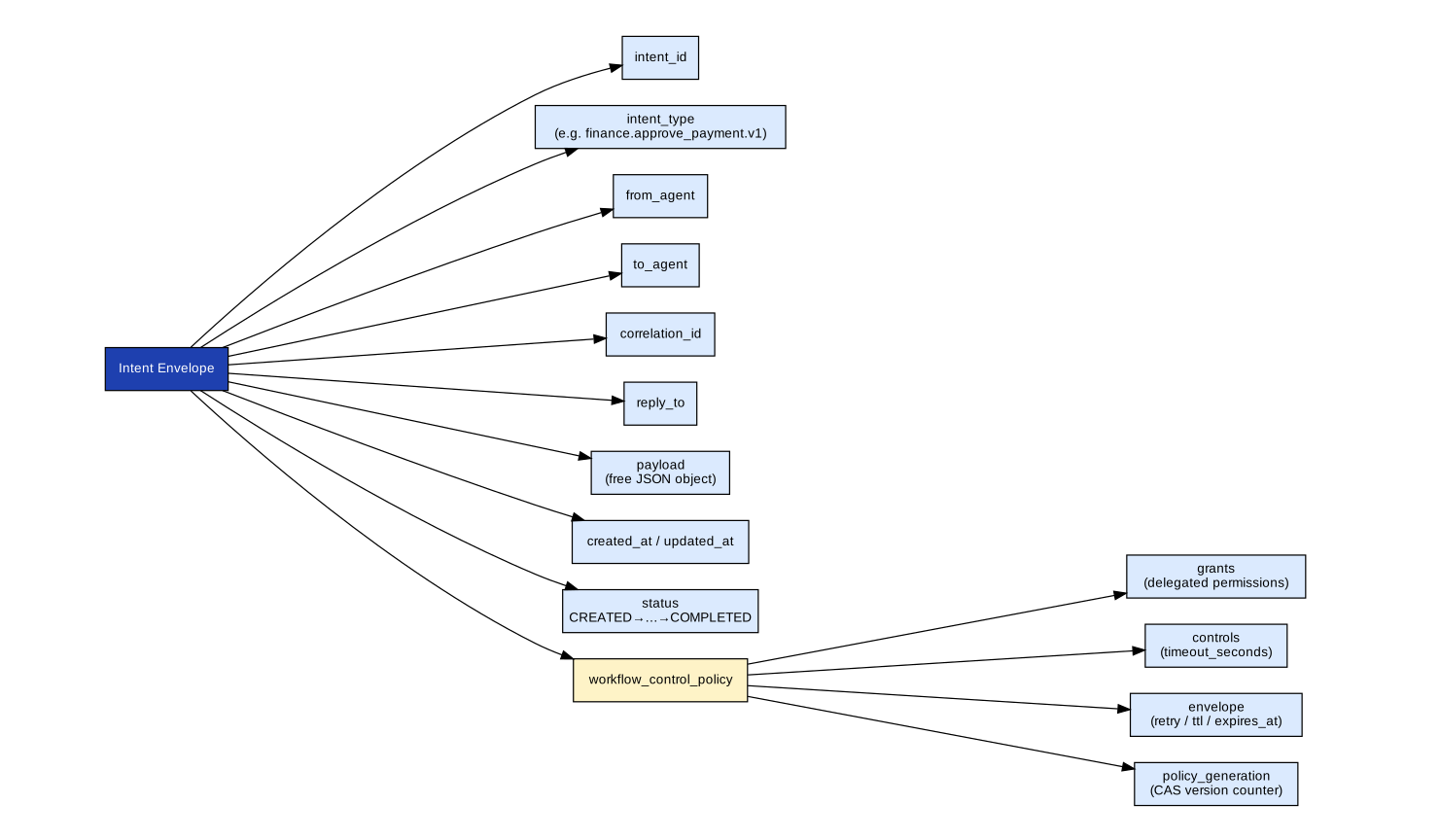
Each field in the envelope is normatively defined here. The runtime and all SDKs must conform to these field names, types, and validation rules.
| Repository | Relationship |
|---|---|
| axme-docs | Derives OpenAPI artifacts and narrative docs from these schemas |
| axme-conformance | Validates runtime and SDK behavior against these contracts |
| Control-plane runtime (private) | Runtime implementation must conform to schemas defined here |
| axme-sdk-python | Python client - API surface derived from these contracts |
| axme-sdk-typescript | TypeScript client |
| axme-sdk-go | Go client |
| axme-sdk-java | Java client |
| axme-sdk-dotnet | .NET client |
Schema Governance (for contributors)
Schemas follow a three-phase lifecycle: stable -> deprecated -> removed. Breaking changes require a new major schema version. Additive changes are backward-compatible.
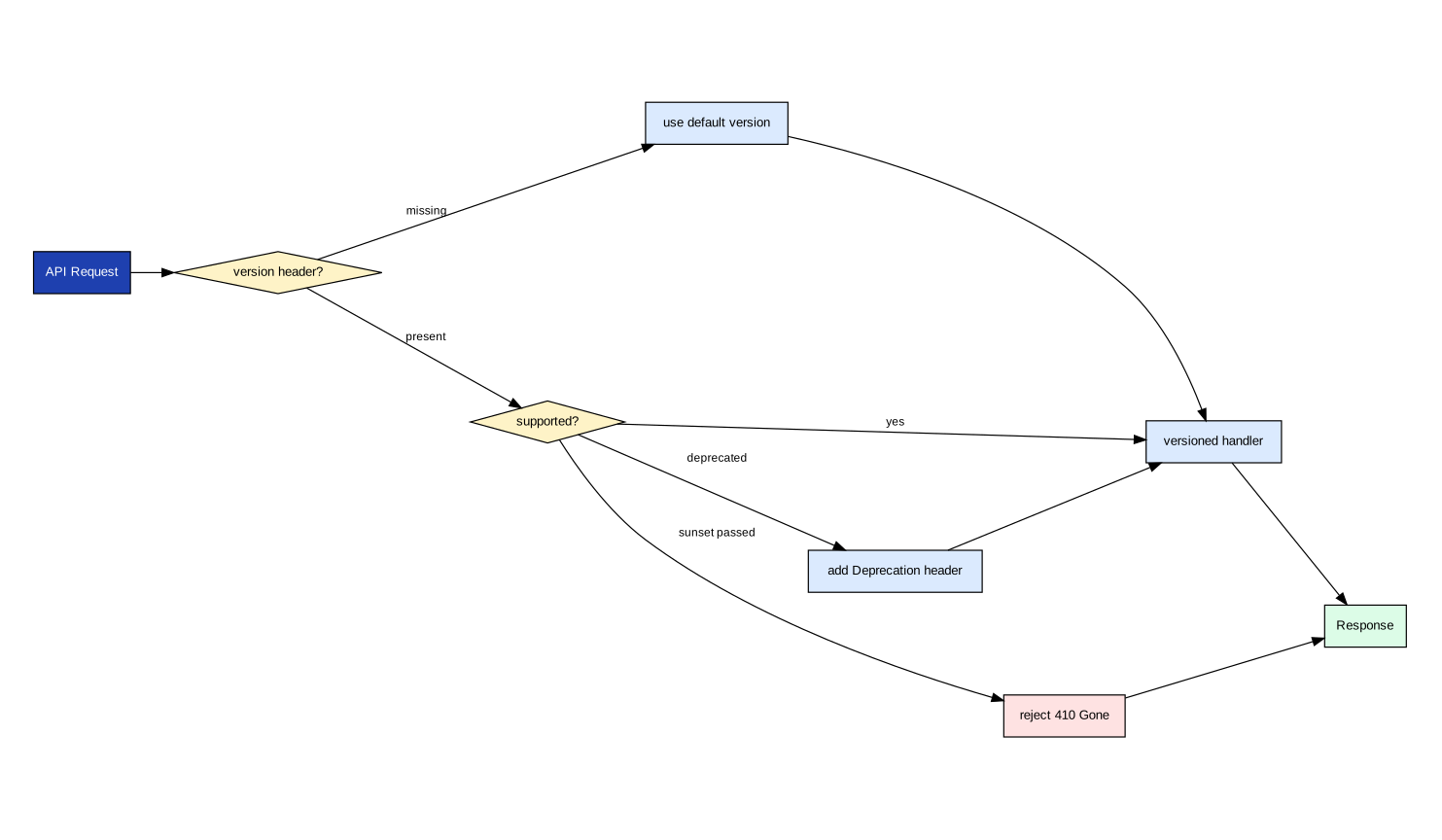
A schema version enters deprecation with a minimum 90-day notice period. Clients targeting a deprecated version receive Deprecation response headers. Removal is announced in the migration guide.
All schema changes go through a governance review before landing. The compatibility matrix ensures no existing consumer breaks across patch and minor versions.
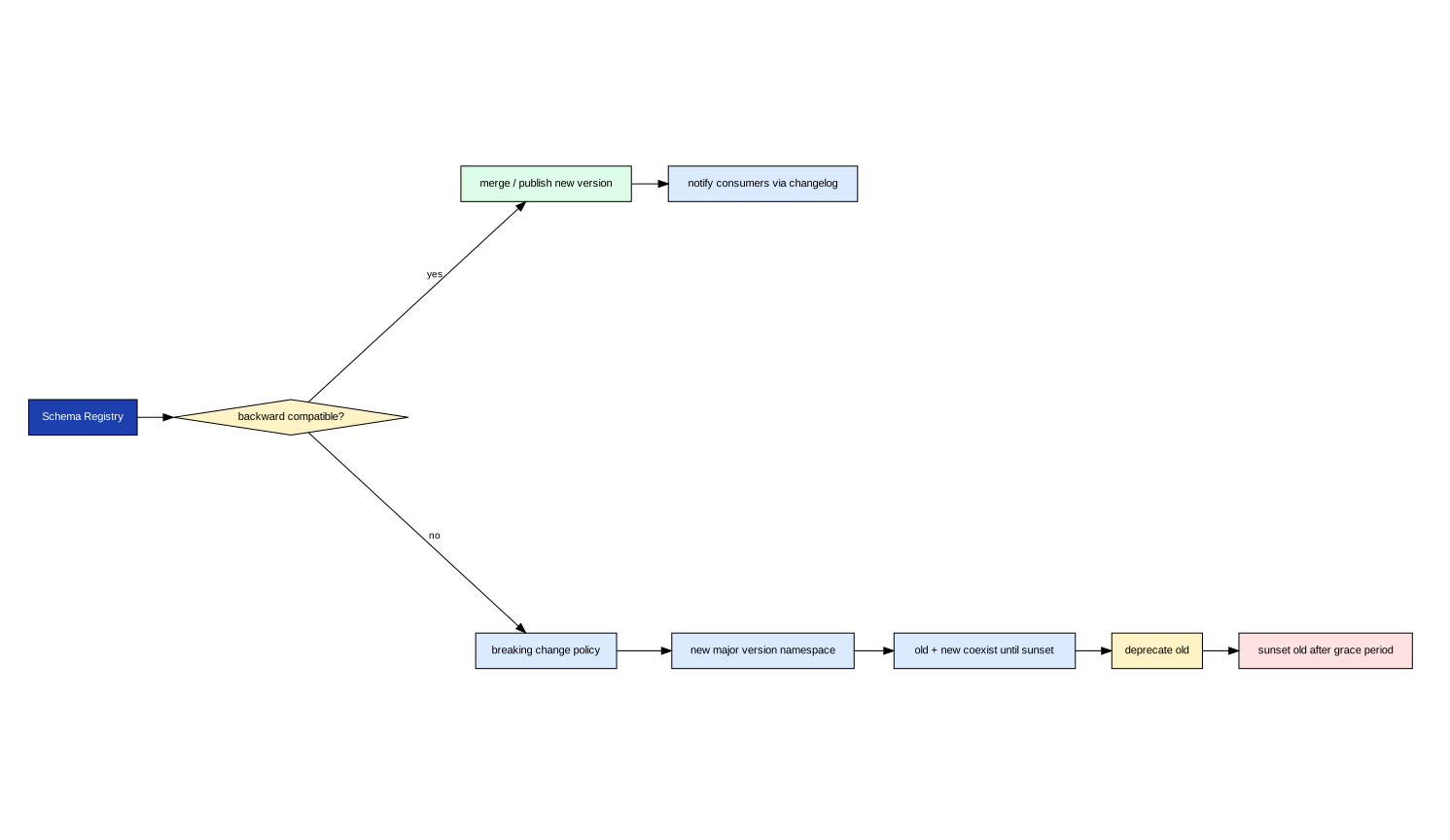
Governance steps: proposal -> impact analysis -> compatibility check -> reviewer sign-off -> merge -> changelog entry -> docs sync.
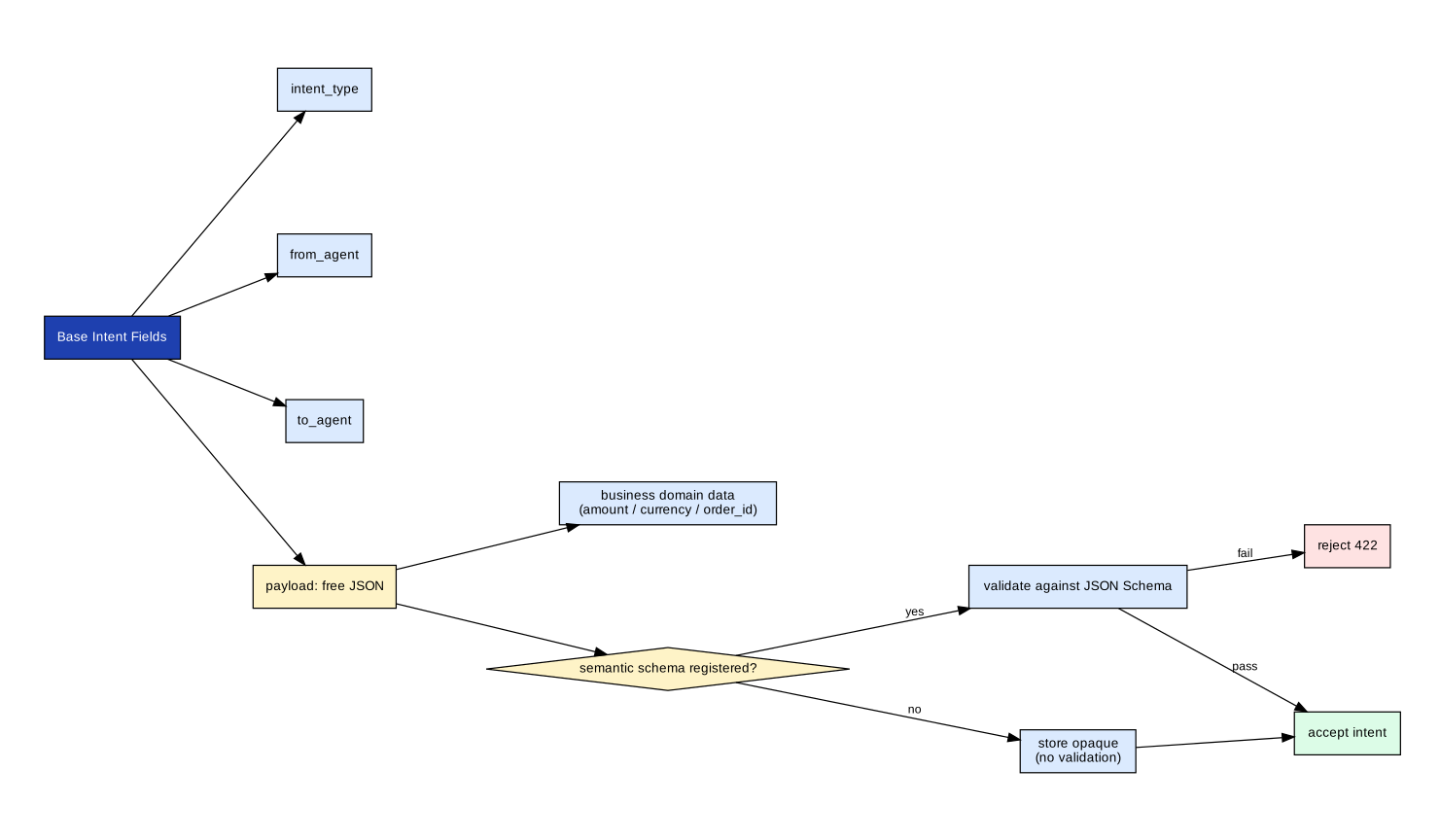
Intent schemas are typed by intent_type. The payload field is a structured JSON object defined per type - not a free-form blob.
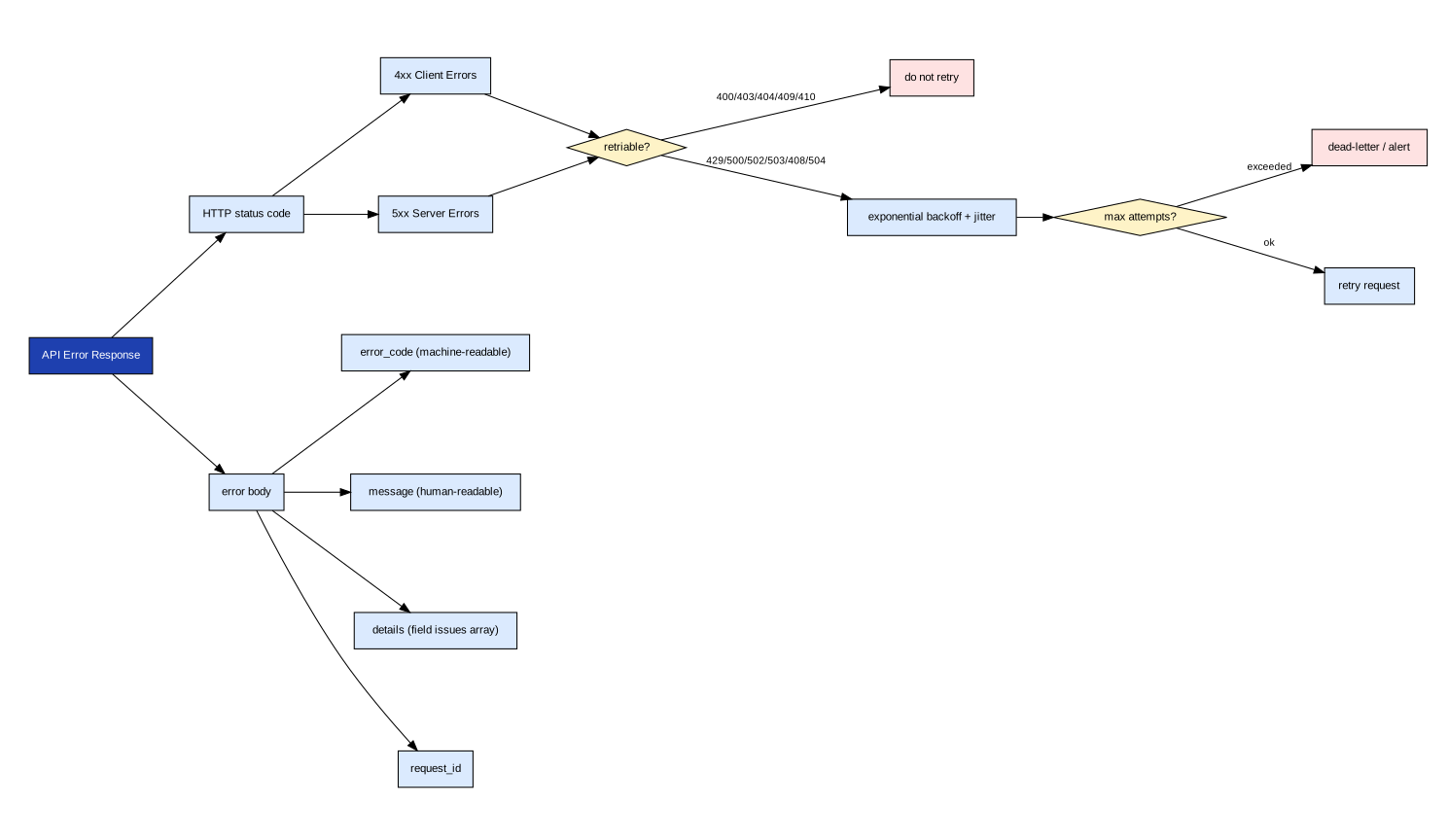
All error responses follow a uniform model: HTTP status + machine-readable error code + retriability hint.
A contract family is considered complete only when it is aligned across all five layers:
axp-spec- normative schema definition (this repo)axme-docs- OpenAPI artifact and narrative documentation- SDK clients - implemented and tested method in each of the five SDKs
axme-conformance- conformance check covering the contract- Runtime -
axme-control-planebehavior matches the schema
python -m pip install -e ".[dev]"
python scripts/validate_schemas.py
pytest- Schema proposals and breaking-change requests: open an issue with label
schema-proposal - Contribution guidelines: CONTRIBUTING.md
hello@axme.ai · @axme_ai · Security · License