Translate regular-expressions #3
Conversation


 S1ngS1ng
added
the
ready for review
S1ngS1ng
added
the
ready for review

 S1ngS1ng
left a comment
S1ngS1ng
left a comment
S1ngS1ng
left a comment
There was a problem hiding this comment.
关于 match,search 和 find,你给出了多种翻译。其实应该统一一下的。
还有 test。test 是 RegExp 的方法,因此发起者应为一个正则表达式。而 search 和 match 均为字符串的方法,发起者应为字符串。
还有 find,和 look for。这里的语序你翻译的没错:

find 不是字符串或 RegExp 的方法,直接翻译成 匹配到 或 找到 应该就够了。
match 也是一样,翻译成 匹配到 就好。
search 你翻译的是 搜索,我感觉可以;但有时可能换成 搜寻 通顺些。比如:

后两个用搜寻,个人感觉好些。注意语序。
而 test是用来验证是否通过 pattern 里定义的规则的测试,所以翻译成 检测 会不会好些?
类似的评论我就不再在 diff 里 comment 了。你更新之后仔细检查一下前后文吧
建议 pattern 翻译为 规则 或 匹配规则 就好。不要翻译成 模式
全篇你的 您 => 你
我现在 review 到了 161 行。因为改动比较多,请先修改,然后检查一下标点和空格,以及通篇翻译是否通顺
| "Regular expressions are used in programming languages to match parts of strings. You create patterns to help you do that matching.", | ||
| "If you want to find the word <code>\"the\"</code> in the string <code>\"The dog chased the cat\"</code>, you could use the following regular expression: <code>/the/</code>. Notice that quote marks are not required within the regular expression.", | ||
| "JavaScript has multiple ways to use regexes. One way to test a regex is using the <code>.test()</code> method. The <code>.test()</code> method takes the regex, applies it to a string (which is placed inside the parentheses), and returns <code>true</code> or <code>false</code> if your pattern finds something or not.", | ||
| "在编程语言中,正则表达式用于匹配指定的字符串。通过正则表达式创建模式(规则)可以帮你完成指定匹配。", |
There was a problem hiding this comment.
模式 建议 =>
匹配模式
你可以通过创建匹配模式(规则)来匹配字符串中指定的部分。
| "JavaScript has multiple ways to use regexes. One way to test a regex is using the <code>.test()</code> method. The <code>.test()</code> method takes the regex, applies it to a string (which is placed inside the parentheses), and returns <code>true</code> or <code>false</code> if your pattern finds something or not.", | ||
| "在编程语言中,正则表达式用于匹配指定的字符串。通过正则表达式创建模式(规则)可以帮你完成指定匹配。", | ||
| "如果你想要在字符串 <code>\"The dog chased the cat\"</code> 中匹配到 <code>\"the\"</code> 这个单词,你可以使用如下正则表达式:<code>/the/</code>。注意,正则表达式中不需要引号。", | ||
| "JavaScript中有多种使用正则表达式的方法。测试正则表达式的一种方法是使用 <code>.test()</code> 方法。<code>.test()</code> 方法会把你编写的正则表达式应用到一个字符串(即括号内的内容),如果你的模式成功匹配到字符,则返回 <code>true</code>,反之,返回 <code>false</code>。", |
There was a problem hiding this comment.
JavaScript 之后应该加上空格
你的模式 建议 =>
你定义的规则
| "<blockquote>let testStr = \"freeCodeCamp\";<br>let testRegex = /Code/;<br>testRegex.test(testStr);<br>// Returns true</blockquote>", | ||
| "<hr>", | ||
| "Apply the regex <code>myRegex</code> on the string <code>myString</code> using the <code>.test()</code> method." | ||
| "使用 <code>.test()</code> 方法把正则表达式 <code>myRegex</code> 应用到字符串 <code>myString</code> 上面。" |
There was a problem hiding this comment.
使用 <code>.test()</code> 方法把正则表达式 <code>myRegex</code> 应用到字符串 <code>myString</code> 上面。 建议 =>
使用 <code>.test()</code> 方法,测试字符串 <code>myString</code> 是否符合正则表达式 <code>myRegex</code> 定义的规则。
这样会不会通顺些?你决定吧
| "text": "Your result should return <code>true</code>.", | ||
| "testString": "assert(result === true, 'Your result should return <code>true</code>.');" | ||
| "text": "你的返回结果应该为 <code>true</code>.", | ||
| "testString": "assert(result === true, '你的返回结果应该为 <code>true</code>.');" |
| "在上一个挑战中,你使用正则表达式 <code>/Hello/</code> 搜索到了字符串 <code>\"Hello\"</code>。那个字符串搜索字符串 <code>\"Hello\"</code> 的文字匹配。下面是另一个搜索字符串 <code>\"Kevin\"</code> 文字匹配的示例:", | ||
| "<blockquote>let testStr = \"Hello, my name is Kevin.\";<br>let testRegex = /Kevin/;<br>testRegex.test(testStr);<br>// Returns true</blockquote>", | ||
| "Any other forms of <code>\"Kevin\"</code> will not match. For example, the regex <code>/Kevin/</code> will not match <code>\"kevin\"</code> or <code>\"KEVIN\"</code>.", | ||
| "任何其他形式的 <code>\"Kevin\"</code> 都不会被匹配。例如,正则表达式 <code>/Kevin/</code> 不会匹配 <code>\"kevin\"</code> 或者 <code>\"KEVIN\"</code> 。", |
| "你还可以搜索不止两个模式。你可以通过添加更多的模式来实现这一功能,这些模式将包含更多的 <code>OR</code> 操作符来分隔它们,比如 <code>/yes|no|maybe/</code> 。", | ||
| "<hr>", | ||
| "Complete the regex <code>petRegex</code> to match the pets <code>\"dog\"</code>, <code>\"cat\"</code>, <code>\"bird\"</code>, or <code>\"fish\"</code>." | ||
| "完成正则表达式 <code>petRegex</code> 匹配 <code>\"dog\"</code> 、<code>\"cat\"</code> 、<code>\"bird\"</code> 或者 <code>\"fish\"</code> 。" |
There was a problem hiding this comment.
完成正则表达式 <code>petRegex</code> 匹配…… => 完成正则表达式 <code>petRegex</code>,让它可以匹配到……
| { | ||
| "text": "Your regex <code>petRegex</code> should return <code>true</code> for the string <code>\"John has a pet dog.\"</code>", | ||
| "testString": "assert(petRegex.test('John has a pet dog.'), 'Your regex <code>petRegex</code> should return <code>true</code> for the string <code>\"John has a pet dog.\"</code>');" | ||
| "text": "对于字符串 <code>\"John has a pet dog.\"</code>,你的正则表达式 <code>petRegex</code> 应该返回 <code>true</code> 。", |
There was a problem hiding this comment.
这里的表述都不太好。返回 true 的不是 petRegex,而应该是 petRegex.test()。
因此,要么说:
对于字符串 <code>\"John has a pet dog.\"</code>,你的正则表达式 <code>petRegex</code> 的 <code>test</code> 方法应该返回 <code>true</code> 。
或者说:字符串 <code>\"John has a pet dog.\"</code> 应该可以通过正则表达式 <code>petRegex</code> 的测试。
下同。选一个一起改吧,或者如果你有更好的表达方式也可以
| "Up until now, you've looked at regexes to do literal matches of strings. But sometimes, you might want to also match case differences.", | ||
| "Case (or sometimes letter case) is the difference between uppercase letters and lowercase letters. Examples of uppercase are <code>\"A\"</code>, <code>\"B\"</code>, and <code>\"C\"</code>. Examples of lowercase are <code>\"a\"</code>, <code>\"b\"</code>, and <code>\"c\"</code>.", | ||
| "You can match both cases using what is called a flag. There are other flags but here you'll focus on the flag that ignores case - the <code>i</code> flag. You can use it by appending it to the regex. An example of using this flag is <code>/ignorecase/i</code>. This regex can match the strings <code>\"ignorecase\"</code>, <code>\"igNoreCase\"</code>, and <code>\"IgnoreCase\"</code>.", | ||
| "到目前为止,你已经查看了利用正则表达式来执行字符串的文字匹配。但是有时候,你可能也想匹配不同的情况。", |
| "Case (or sometimes letter case) is the difference between uppercase letters and lowercase letters. Examples of uppercase are <code>\"A\"</code>, <code>\"B\"</code>, and <code>\"C\"</code>. Examples of lowercase are <code>\"a\"</code>, <code>\"b\"</code>, and <code>\"c\"</code>.", | ||
| "You can match both cases using what is called a flag. There are other flags but here you'll focus on the flag that ignores case - the <code>i</code> flag. You can use it by appending it to the regex. An example of using this flag is <code>/ignorecase/i</code>. This regex can match the strings <code>\"ignorecase\"</code>, <code>\"igNoreCase\"</code>, and <code>\"IgnoreCase\"</code>.", | ||
| "到目前为止,你已经查看了利用正则表达式来执行字符串的文字匹配。但是有时候,你可能也想匹配不同的情况。", | ||
| "大小写(或者字母大小写)是大写字母和小写字母的区别。大写字母的例子有 <code>\"A\"</code> 、<code>\"B\"</code> 和 <code>\"C\"</code>。小写字母的例子有 <code>\"a\"</code> 、<code>\"b\"</code> 和 <code>\"c\"</code> 。", |
There was a problem hiding this comment.
删掉全角标点前,半角字符后的空格。
这样是对的:
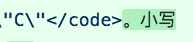
这样就是错的:
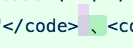
| "You can match both cases using what is called a flag. There are other flags but here you'll focus on the flag that ignores case - the <code>i</code> flag. You can use it by appending it to the regex. An example of using this flag is <code>/ignorecase/i</code>. This regex can match the strings <code>\"ignorecase\"</code>, <code>\"igNoreCase\"</code>, and <code>\"IgnoreCase\"</code>.", | ||
| "到目前为止,你已经查看了利用正则表达式来执行字符串的文字匹配。但是有时候,你可能也想匹配不同的情况。", | ||
| "大小写(或者字母大小写)是大写字母和小写字母的区别。大写字母的例子有 <code>\"A\"</code> 、<code>\"B\"</code> 和 <code>\"C\"</code>。小写字母的例子有 <code>\"a\"</code> 、<code>\"b\"</code> 和 <code>\"c\"</code> 。", | ||
| "你可以使用所谓的模式修正符来匹配这两种情况。有许多其他标志,不过这里主要关注忽略大小写的模式修正符 - <code>i</code> 模式修正符。你可以通过将它附加到正则表达式之后来使用它。这里给出使用该模式修正符的一个实例 <code>/ignorecase/i</code>。这个字符串可以匹配字符串 <code>\"ignorecase\"</code> 、<code>\"igNoreCase\"</code> 和 <code>\"IgnoreCase\"</code> 。", |
There was a problem hiding this comment.
S1ngS1ng
added
the
need update
 huluoyang
removed
the
ready for review
huluoyang
changed the title
huluoyang
removed
the
ready for review
huluoyang
changed the title

|
@Robin-zero 看下 comments,记得更新,以及 |
|
Changes addressed in #21 |
3 participants


翻译章节
《算法和数据结构——正则表达式》
变更文件
regular-expressions.json
regular-expressions.md
翻译进度
50%
0%