A project by ICFOSS

Rainfall also known as precipitation is an important part of environment stability. Inorder to have a sustainable echo system, it is important for living beings to have access to clean drinking water. It is also important for early flood warning as well. Many efforts to attain this objective depends on accurate precipitation monitoring.
Precipitation monitoring devices are broadly classified into manuel, mechanical, and optical. It is desirable to have accurate sensors which are not manuel/mechanical/optical. This project is an attempt to predict precipitation using machine learning techniques with sound loudness as input feature.
- Gopika T G
- Sajil C K
- Manu Mohan M S
- Aiswarya Babu
- Harikrishnan K P

- Davis AeroCone 6466M Rain Gauge is the mechanical raingauge we are using as a reference for comparing rainfall against acoustic readings.

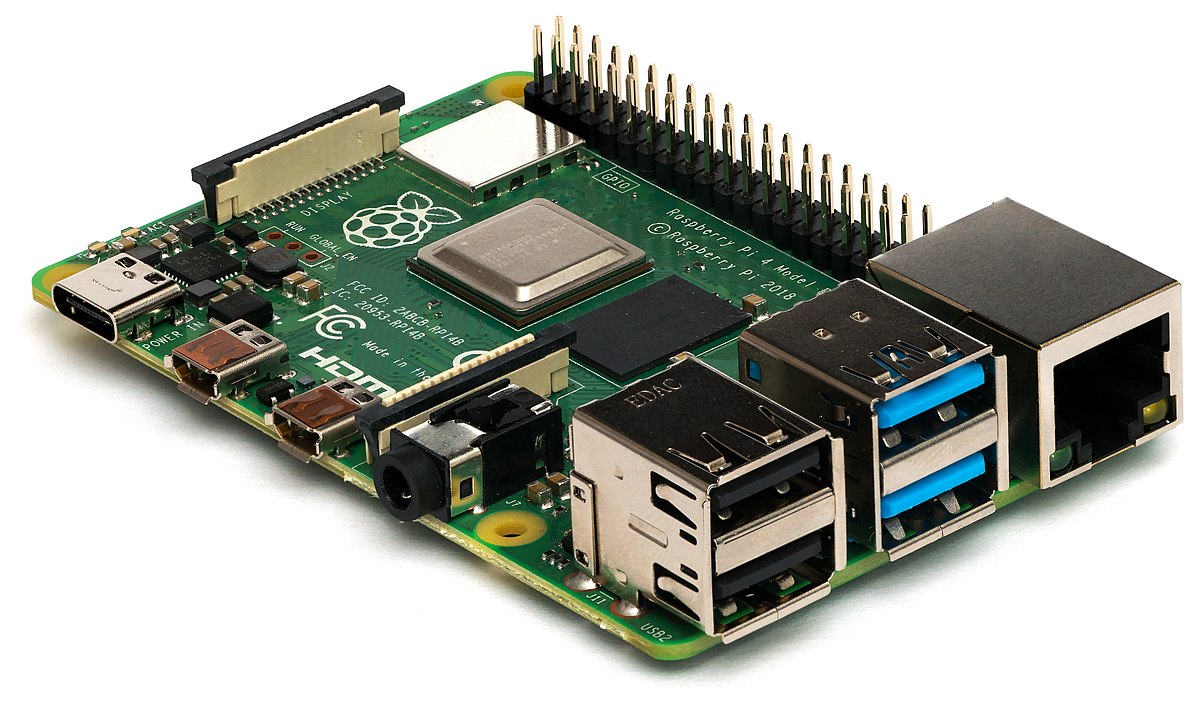
- We used Raspberry Pi as a DAQ device for audio recording with high resolution and sampling rate.
The data from USB mic contains audio files saved in wav format with a fixed duration. The parameters of desired audio files (e.g. sampling rate, sample duration, bit size, total recording time, etc.) can be set in the config.yaml file. The recorded audio files are further analysed for deep learning modeling.
The recorded wav files are saved with a timestamp (yyyy_mm_dd_hh_mm_ss_millisec.wav) file name as shown below.
2023_11_06_16_13_11_011224.wav
-
Rain_Data_Master_2023 contains all audio recordings and rainfall data from mechanical rainguage in overlapping time durations collected so far. Please note that files are of different duration (10 sec and 3 sec) and sampling rates (48K & 8K).
-
Rain_Data_Master_8K Contains downsamples version of Rain_Data_Master_2023 so that all files are of same sample rate (i.e. 8K).
-
Rainfall_Mechanical_22_November_2023 contains both audio recordings and rainfall data from mechanical rainguage in overlapping time duration (~10 hrs).
-
The dataset rainfall-mini-dataset contains audio recordings which are classified into two main categories "rain" and "ambient" each class containing 24 samples of 10 seconds duration.
-
rain-drop-mini-splitted is a splitted version of rainfall-mini-dataset where each 10 second audio is splitted into samples of 200 milliseconds duration.
-
rain-drop-count-basic contains the labeled value, i.e the number of rain drops in each of the samples in rain-drop-mini-splitted
-
rainfall-sound-2023-11-13-14-00-00-icfoss is the rainfall sound recorded on 13th November 2023 afternoon near ICFOSS premise. The rainfall sound on the metallic enclosure was recorded using Raspberry Pi and USB Mic. The sampling rate was 48Ksamples/sec at 32bit resolution. Each audio file has a duration of 10 seconds. The timestamp corresponding to each file was corrupted (to last known time in the device) due to lack of real-time clock/wifi connectivity in the recording setup.
daq_pi.pycontains Python script for automated audio recording in Raspberry which is added to the~/.bashrcprofile so that the script is run everytime the device boots up and logs in.seq_mech_vs_non_mech.ipynbcontains the LSTM modeling code which uses acoustic and mechanical data for rainfall estimationrain_drop_counter_modeling.ipynbis a jupyter notebook which trains a deep learning model to predict number of rain drops in every 200 millliseconds. The best model has a test accuracy of 78%.raindrop_counter.pyis a Python script which can count the number of rain drops in a raspberry pi recorded audio using the deep learning model trained on step 3.
streamlit run demo_app.py| EPOCHS | MODEL | MAPE |
|---|---|---|
| 25 | LSTM | 31.15% |
| Epochs | Model | Test accuracy | Test loss |
|---|---|---|---|
| 50 | DNN | 75.76% | 1.966277 |
- The LSTM based sequential model is having a reasonably good performance with a Mean Absolute Percentage Error (MAPE) of 31.15%
- The test accuracy of DNN model trained on rain-drop-mini-splitted dataset is 75%-78%.