Skip to content

KAFKA-9629 Use generated protocol for Fetch API#9008

Merged
mumrah merged 21 commits intoapache:trunkfrom
mumrah:KAFKA-9629-fetch-api-generated-protocol
Jul 30, 2020
Merged

KAFKA-9629 Use generated protocol for Fetch API#9008
mumrah merged 21 commits intoapache:trunkfrom
mumrah:KAFKA-9629-fetch-api-generated-protocol

Conversation

@mumrah
Copy link
Copy Markdown
Member

@mumrah mumrah commented Jul 10, 2020

This change makes use of the generated protocols for FetchRequest and FetchResponse. The main challenge here was how to allow the transferrable bytes of the record set to be directly sent to the outgoing response without copying into a buffer.

The proposed solution is similar to the existing multi-send object used in FetchResponse. However, a new writer class RecordsWriter was introduced to allow interleaving of ByteBufferSend (for headers and other non-record fields) along with RecordsSend-s which implement the efficient byte transfer.

Another change introduced here is that FetchRequest and FetchResponse do not maintain their own copies of the fields from the message. Instead, they hold a reference to the generated message class (FetchRequestData and FetchResponseData). Read-only copies of different forms of the message data are created once open construction to allow for efficient access using the existing class methods.

For example, in FetchRequest we hold the FetchRequestData, but also compute and hold:

    private final FetchRequestData fetchRequestData;

    // These are immutable read-only structures derived from FetchRequestData
    private final Map<TopicPartition, PartitionData> fetchData;
    private final List<TopicPartition> toForget;
    private final FetchMetadata metadata;

And in FetchResponse, we similarly hold:

    private final FetchResponseData fetchResponseData;
    private final LinkedHashMap<TopicPartition, PartitionData<T>> responseDataMap;

If we want, we could deprecate all the accessors on FetchRequest/FetchResponse and force callers to use the #data() method. This would eliminate the need for these additional data structures.

Finally, most of the other changes are fixing up tests that were actually using invalid default values for protocol messages (which are now enforced, thanks to the generated classes) as well as rectifying the JSON schema to match what the actual defined Schemas were (e.g., FETCH_RESPONSE_V11)

@ijuma
Copy link
Copy Markdown
Member

ijuma commented Jul 10, 2020

Thanks for the PR. Since this affects the fetch path, let's make sure we benchmark this. cc @lbradstreet

@hachikuji
Copy link
Copy Markdown
Contributor

I agree that some benchmarks would be useful. One of the key differences is how the MultiRecordsSend gets constructed, so that is probably one thing. Potentially we are faster here because we do not have the conversion to Struct.

@lbradstreet
Copy link
Copy Markdown
Contributor

I agree that it’d be great to have a benchmark on both the request and response side.

Comment thread clients/src/main/resources/common/message/FetchRequest.json Outdated
Comment thread clients/src/main/java/org/apache/kafka/common/requests/FetchResponse.java Outdated
this.responseData = responseData;
this.throttleTimeMs = throttleTimeMs;
this.sessionId = sessionId;
this.fetchResponseData = toMessage(throttleTimeMs, error, responseData.entrySet().iterator(), sessionId);
Copy link
Copy Markdown
Contributor

Choose a reason for hiding this comment

The reason will be displayed to describe this comment to others. Learn more.

Probably better to save for a follow-up, but potentially we can get rid of this conversion by using FetchablePartitionResponse directly in the broker.

Comment thread clients/src/main/java/org/apache/kafka/common/requests/FetchRequest.java Outdated
field.camelCaseName(), field.camelCaseName());
}
} else if (field.type().isRecords()) {
// TODO is this valid for record instances?
Copy link
Copy Markdown
Contributor

Choose a reason for hiding this comment

The reason will be displayed to describe this comment to others. Learn more.

I don't think FileRecords and MemoryRecords instances can be compared directly, if that's what the question is about.

Copy link
Copy Markdown
Member Author

@mumrah mumrah Jul 13, 2020

Choose a reason for hiding this comment

The reason will be displayed to describe this comment to others. Learn more.

No I don't think they are designed to be compared. My main question was whether we can compare the same type (MemoryRecords to MemoryRecords). I think it should work in the case of Objects.equals since it first checks if the instances are the same. I don't think we have any use cases where we have equivalent instances of records that are actual separate objects.

I have a similar question about hashCode down below. Records doesn't implement either of these, but we have to include them for all fields in the generated message classes for completeness. I think it's probably fine.

@cmccabe, any insight here?

Copy link
Copy Markdown
Member

Choose a reason for hiding this comment

The reason will be displayed to describe this comment to others. Learn more.

The hashCode of MemoryRecords takes into account the buffer position, so it's kind of useless. FileRecords doesn't even define it. We should consider defining the hashCode and equals of Records to be identity based.

Copy link
Copy Markdown
Contributor

Choose a reason for hiding this comment

The reason will be displayed to describe this comment to others. Learn more.

@mumrah : equality for the generated messages should mean bytewise equality. So if two FetchResponseData instances contain the same data, they should be equal, even if one is using MemoryRecords and the other is using FileRecords. Same for hashCode, of course.

If it's too much trouble to change the Records class, you can just write a static utility method in MessageUtils and invoke it from the generated classes. I expect that we won't be doing this kind of comparison except in tests, so you don't need to optimize the method too much.

Copy link
Copy Markdown
Member

Choose a reason for hiding this comment

The reason will be displayed to describe this comment to others. Learn more.

That would mean loading data from disk to compute equals and hashCode for FileRecords. That's pretty unusual for such methods.

Struct responseBodyStruct = toStruct(apiVersion);
// Generate the Sends for the response fields and records
ArrayDeque<Send> sends = new ArrayDeque<>();
RecordsWriter writer = new RecordsWriter(dest, sends::add);
Copy link
Copy Markdown
Contributor

Choose a reason for hiding this comment

The reason will be displayed to describe this comment to others. Learn more.

Pretty nice if this is all the manual code we need. If we wanted to go a little further, we could push toSend into the generated class as well. That will be necessary if we ever want to get of the current AbstractRequest and AbstractResponse types and replace them with the generated data classes (which was always the plan). However, I think this could be left for follow-up work.

Comment thread clients/src/main/java/org/apache/kafka/common/protocol/RecordsReader.java Outdated
Comment thread clients/src/main/resources/common/message/FetchResponse.json
Comment on lines +107 to +109
result.put(new TopicPartition(fetchTopic.topic(), fetchPartition.partition()),
new PartitionData(fetchPartition.fetchOffset(), fetchPartition.logStartOffset(),
fetchPartition.partitionMaxBytes(), leaderEpoch));
Copy link
Copy Markdown
Member

Choose a reason for hiding this comment

The reason will be displayed to describe this comment to others. Learn more.

@mumrah Have we considered dropping the PartitionData class entirely in favour of using FetchRequestData .FetchPartition directly in the broker? The main difference is that FetchPartition does not have an Optional for the leader epoch but returns the default value (-1) instead.

Copy link
Copy Markdown
Member Author

Choose a reason for hiding this comment

The reason will be displayed to describe this comment to others. Learn more.

Yes, I think it's a good idea. However, it would expand the scope of this change quite a bit. I'm working on some micro benchmarks now, and if we don't have any apparent regressions then I'll save this for a follow-on PR.

Copy link
Copy Markdown
Contributor

Choose a reason for hiding this comment

The reason will be displayed to describe this comment to others. Learn more.

As an aside, it would be awesome to add Optional support to the generated classes. We have had so many bugs which were caused by sentinel values sneaking into unexpected places.

Copy link
Copy Markdown
Contributor

@lbradstreet lbradstreet Jul 16, 2020

Choose a reason for hiding this comment

The reason will be displayed to describe this comment to others. Learn more.

Let's open a jira for getting rid of the toPartitionDataMap if we don't address it in this PR. It's a pretty large part of the cost here and there are only a few places we would have to deal with it. I think we should fix it sooner rather than later too.

Copy link
Copy Markdown
Member

Choose a reason for hiding this comment

The reason will be displayed to describe this comment to others. Learn more.

Yeah, Optional support would be awesome. I was actually thinking how to do it. I may give it a shot during the weekend ;)

Copy link
Copy Markdown
Member

Choose a reason for hiding this comment

The reason will be displayed to describe this comment to others. Learn more.

@hachikuji @mumrah @cmccabe I have put together a prototype to support java.util.Optional in the auto-generated classes. It a good draft at the moment but it is a good basis for discussions: #9085

@mumrah
Copy link
Copy Markdown
Member Author

mumrah commented Jul 15, 2020

Added some basic jmh benchmarks. Here are the preliminary results (run on my laptop, so take with a grain of salt). All these tests are using 1000 topics with 20 partitions each. For FetchResponse, I used static MemoryRecords rather than FileRecords to try and better isolate the serialization time.

On trunk:

Benchmark                                        (partitionCount)  (topicCount)  Mode  Cnt        Score        Error  Units
FetchRequestBenchmark.testConstructFetchRequest                20          1000  avgt   30         3.591 ±      0.046  ns/op
FetchRequestBenchmark.testSerializeFetchRequest                20          1000  avgt   30  10049872.274 ± 440324.738  ns/op
FetchResponseBenchmark.testConstructFetchResponse              20          1000  avgt   30         1.911 ±      0.018  ns/op
FetchResponseBenchmark.testSerializeFetchResponse              20          1000  avgt   30  13693835.230 ± 150935.356  ns/op

On this branch:

Benchmark                                        (partitionCount)  (topicCount)  Mode  Cnt        Score        Error  Units
FetchRequestBenchmark.testConstructFetchRequest                20          1000  avgt   30  4809813.661 ± 190773.702  ns/op
FetchRequestBenchmark.testSerializeFetchRequest                20          1000  avgt   30  4646758.697 ± 551449.969  ns/op
FetchResponseBenchmark.testConstructFetchResponse              20          1000  avgt   30  2507813.886 ±  17457.127  ns/op
FetchResponseBenchmark.testSerializeFetchResponse              20          1000  avgt   30  7231935.691 ± 461221.717  ns/op

As we expected quite a bit more time is spent during the construction of FetchRequest/FetchResponse due to conversion to existing data structures. We also see a reducing in serialization time since we no longer convert to Struct first.

FetchRequest total construction+serialization time is about the same before and after the change, and FetchResponse total time is slightly less after the change.

@lbradstreet
Copy link
Copy Markdown
Contributor

Added some basic jmh benchmarks. Here are the preliminary results (run on my laptop, so take with a grain of salt). All these tests are using 1000 topics with 20 partitions each. For FetchResponse, I used static MemoryRecords rather than FileRecords to try and better isolate the serialization time.

On trunk:

Benchmark                                        (partitionCount)  (topicCount)  Mode  Cnt        Score        Error  Units
FetchRequestBenchmark.testConstructFetchRequest                20          1000  avgt   30         3.591 ±      0.046  ns/op
FetchRequestBenchmark.testSerializeFetchRequest                20          1000  avgt   30  10049872.274 ± 440324.738  ns/op
FetchResponseBenchmark.testConstructFetchResponse              20          1000  avgt   30         1.911 ±      0.018  ns/op
FetchResponseBenchmark.testSerializeFetchResponse              20          1000  avgt   30  13693835.230 ± 150935.356  ns/op

On this branch:

Benchmark                                        (partitionCount)  (topicCount)  Mode  Cnt        Score        Error  Units
FetchRequestBenchmark.testConstructFetchRequest                20          1000  avgt   30  4809813.661 ± 190773.702  ns/op
FetchRequestBenchmark.testSerializeFetchRequest                20          1000  avgt   30  4646758.697 ± 551449.969  ns/op
FetchResponseBenchmark.testConstructFetchResponse              20          1000  avgt   30  2507813.886 ±  17457.127  ns/op
FetchResponseBenchmark.testSerializeFetchResponse              20          1000  avgt   30  7231935.691 ± 461221.717  ns/op

As we expected quite a bit more time is spent during the construction of FetchRequest/FetchResponse due to conversion to existing data structures. We also see a reducing in serialization time since we no longer convert to Struct first.

FetchRequest total construction+serialization time is about the same before and after the change, and FetchResponse total time is slightly less after the change.

Nice improvement! Could you please rerun them both with ./jmh.sh -prof gc? We should make sure that we are not increasing our garbage generation.

}

this.header = new RequestHeader(ApiKeys.FETCH, ApiKeys.FETCH.latestVersion(), "jmh-benchmark", 100);
this.request = FetchRequest.Builder.forConsumer(0, 0, fetchData).build(ApiKeys.FETCH.latestVersion());
Copy link
Copy Markdown
Contributor

@lbradstreet lbradstreet Jul 15, 2020

Choose a reason for hiding this comment

The reason will be displayed to describe this comment to others. Learn more.

Can we please have benchmarks for both forConsumer and forReplica fetch requests?

Copy link
Copy Markdown
Contributor

Choose a reason for hiding this comment

The reason will be displayed to describe this comment to others. Learn more.

Can you also try rerunning the benchmark with random topic names, e.g. UUID.randomUUID().toString() and compare it to the existing topic names? I think our hashCode implementation sucks and we are seeing a lot of collisions.

Copy link
Copy Markdown
Contributor

@lbradstreet lbradstreet Jul 16, 2020

Choose a reason for hiding this comment

The reason will be displayed to describe this comment to others. Learn more.

Changing our hashCode method massively improves the benchmark times so I think the current benchmark results aren't really representative.

--- a/clients/src/main/java/org/apache/kafka/common/TopicPartition.java
+++ b/clients/src/main/java/org/apache/kafka/common/TopicPartition.java
@@ -46,10 +46,7 @@ public final class TopicPartition implements Serializable {
     public int hashCode() {
         if (hash != 0)
             return hash;
-        final int prime = 31;
-        int result = 1;
-        result = prime * result + partition;
-        result = prime * result + Objects.hashCode(topic);
+        int result = Objects.hash(topic, partition);
         this.hash = result;
         return result;
     }

Edit: it looks like the main difference here is ordering by topic and then partition which seems to avoid the collisions for this reasonably pathological case. Maybe we can just change the test case.

Comment thread clients/src/main/java/org/apache/kafka/common/requests/FetchRequest.java Outdated
@mumrah
Copy link
Copy Markdown
Member Author

mumrah commented Jul 16, 2020

Updated the benchmarks with @lbradstreet's suggestions. Here are the results for 3 partitions, 10 topics. GC profiles included.

On this branch:

Benchmark                                                                                    (partitionCount)  (topicCount)  Mode  Cnt      Score    Error   Units
FetchRequestBenchmark.testFetchRequestForConsumer                                                           3            10  avgt   15   2110.741 ± 27.935   ns/op
FetchRequestBenchmark.testFetchRequestForReplica                                                            3            10  avgt   15   2021.114 ±  7.816   ns/op
FetchRequestBenchmark.testSerializeFetchRequestForConsumer                                                  3            10  avgt   15   3452.799 ± 16.013   ns/op
FetchRequestBenchmark.testSerializeFetchRequestForReplica                                                   3            10  avgt   15   3691.157 ± 60.260   ns/op

GC Profile                                                                                    (partitionCount)  (topicCount)  Mode  Cnt      Score    Error   Units
FetchRequestBenchmark.testFetchRequestForConsumer:·gc.alloc.rate                                            3            10  avgt   15   4295.532 ± 56.061  MB/sec
FetchRequestBenchmark.testFetchRequestForConsumer:·gc.alloc.rate.norm                                       3            10  avgt   15   9984.000 ±  0.001    B/op
FetchRequestBenchmark.testFetchRequestForConsumer:·gc.churn.PS_Eden_Space                                   3            10  avgt   15   4292.525 ± 56.341  MB/sec
FetchRequestBenchmark.testFetchRequestForConsumer:·gc.churn.PS_Eden_Space.norm                              3            10  avgt   15   9977.037 ± 28.311    B/op
FetchRequestBenchmark.testFetchRequestForConsumer:·gc.churn.PS_Survivor_Space                               3            10  avgt   15      0.187 ±  0.027  MB/sec
FetchRequestBenchmark.testFetchRequestForConsumer:·gc.churn.PS_Survivor_Space.norm                          3            10  avgt   15      0.435 ±  0.060    B/op
FetchRequestBenchmark.testFetchRequestForConsumer:·gc.count                                                 3            10  avgt   15   2335.000           counts
FetchRequestBenchmark.testFetchRequestForConsumer:·gc.time                                                  3            10  avgt   15   1375.000               ms
FetchRequestBenchmark.testFetchRequestForReplica:·gc.alloc.rate                                             3            10  avgt   15   4416.855 ± 16.429  MB/sec
FetchRequestBenchmark.testFetchRequestForReplica:·gc.alloc.rate.norm                                        3            10  avgt   15   9832.000 ±  0.001    B/op
FetchRequestBenchmark.testFetchRequestForReplica:·gc.churn.PS_Eden_Space                                    3            10  avgt   15   4417.032 ± 24.858  MB/sec
FetchRequestBenchmark.testFetchRequestForReplica:·gc.churn.PS_Eden_Space.norm                               3            10  avgt   15   9832.358 ± 28.932    B/op
FetchRequestBenchmark.testFetchRequestForReplica:·gc.churn.PS_Survivor_Space                                3            10  avgt   15      0.186 ±  0.015  MB/sec
FetchRequestBenchmark.testFetchRequestForReplica:·gc.churn.PS_Survivor_Space.norm                           3            10  avgt   15      0.415 ±  0.033    B/op
FetchRequestBenchmark.testFetchRequestForReplica:·gc.count                                                  3            10  avgt   15   2280.000           counts
FetchRequestBenchmark.testFetchRequestForReplica:·gc.time                                                   3            10  avgt   15   1376.000               ms
FetchRequestBenchmark.testSerializeFetchRequestForConsumer:·gc.alloc.rate                                   3            10  avgt   15   3256.172 ± 15.524  MB/sec
FetchRequestBenchmark.testSerializeFetchRequestForConsumer:·gc.alloc.rate.norm                              3            10  avgt   15  12384.000 ±  0.001    B/op
FetchRequestBenchmark.testSerializeFetchRequestForConsumer:·gc.churn.PS_Eden_Space                          3            10  avgt   15   3255.019 ± 21.484  MB/sec
FetchRequestBenchmark.testSerializeFetchRequestForConsumer:·gc.churn.PS_Eden_Space.norm                     3            10  avgt   15  12379.587 ± 49.161    B/op
FetchRequestBenchmark.testSerializeFetchRequestForConsumer:·gc.churn.PS_Survivor_Space                      3            10  avgt   15      0.122 ±  0.022  MB/sec
FetchRequestBenchmark.testSerializeFetchRequestForConsumer:·gc.churn.PS_Survivor_Space.norm                 3            10  avgt   15      0.462 ±  0.084    B/op
FetchRequestBenchmark.testSerializeFetchRequestForConsumer:·gc.count                                        3            10  avgt   15   2054.000           counts
FetchRequestBenchmark.testSerializeFetchRequestForConsumer:·gc.time                                         3            10  avgt   15   1389.000               ms
FetchRequestBenchmark.testSerializeFetchRequestForReplica:·gc.alloc.rate                                    3            10  avgt   15   3319.965 ± 53.427  MB/sec
FetchRequestBenchmark.testSerializeFetchRequestForReplica:·gc.alloc.rate.norm                               3            10  avgt   15  13496.000 ±  0.001    B/op
FetchRequestBenchmark.testSerializeFetchRequestForReplica:·gc.churn.PS_Eden_Space                           3            10  avgt   15   3320.125 ± 52.812  MB/sec
FetchRequestBenchmark.testSerializeFetchRequestForReplica:·gc.churn.PS_Eden_Space.norm                      3            10  avgt   15  13496.813 ± 64.774    B/op
FetchRequestBenchmark.testSerializeFetchRequestForReplica:·gc.churn.PS_Survivor_Space                       3            10  avgt   15      0.126 ±  0.021  MB/sec
FetchRequestBenchmark.testSerializeFetchRequestForReplica:·gc.churn.PS_Survivor_Space.norm                  3            10  avgt   15      0.512 ±  0.085    B/op
FetchRequestBenchmark.testSerializeFetchRequestForReplica:·gc.count                                         3            10  avgt   15   2122.000           counts
FetchRequestBenchmark.testSerializeFetchRequestForReplica:·gc.time                                          3            10  avgt   15   1395.000               ms

On trunk:

Benchmark                                                                                    (partitionCount)  (topicCount)  Mode  Cnt      Score     Error   Units
FetchRequestBenchmark.testFetchRequestForConsumer                                                           3            10  avgt   15      3.457 ±   0.016   ns/op
FetchRequestBenchmark.testFetchRequestForReplica                                                            3            10  avgt   15      3.453 ±   0.035   ns/op
FetchRequestBenchmark.testSerializeFetchRequestForConsumer                                                  3            10  avgt   15  13214.306 ±  61.158   ns/op
FetchRequestBenchmark.testSerializeFetchRequestForReplica                                                   3            10  avgt   15  13147.870 ±  52.318   ns/op

GC Profile                                                                                    (partitionCount)  (topicCount)  Mode  Cnt      Score     Error   Units
FetchRequestBenchmark.testFetchRequestForConsumer:·gc.alloc.rate                                            3            10  avgt   15     ≈ 10⁻⁴            MB/sec
FetchRequestBenchmark.testFetchRequestForConsumer:·gc.alloc.rate.norm                                       3            10  avgt   15     ≈ 10⁻⁶              B/op
FetchRequestBenchmark.testFetchRequestForConsumer:·gc.count                                                 3            10  avgt   15        ≈ 0            counts
FetchRequestBenchmark.testFetchRequestForReplica:·gc.alloc.rate                                             3            10  avgt   15     ≈ 10⁻⁴            MB/sec
FetchRequestBenchmark.testFetchRequestForReplica:·gc.alloc.rate.norm                                        3            10  avgt   15     ≈ 10⁻⁶              B/op
FetchRequestBenchmark.testFetchRequestForReplica:·gc.count                                                  3            10  avgt   15        ≈ 0            counts
FetchRequestBenchmark.testSerializeFetchRequestForConsumer:·gc.alloc.rate                                   3            10  avgt   15   1795.576 ±   8.351  MB/sec
FetchRequestBenchmark.testSerializeFetchRequestForConsumer:·gc.alloc.rate.norm                              3            10  avgt   15  26136.002 ±   0.005    B/op
FetchRequestBenchmark.testSerializeFetchRequestForConsumer:·gc.churn.PS_Eden_Space                          3            10  avgt   15   1796.108 ±  11.527  MB/sec
FetchRequestBenchmark.testSerializeFetchRequestForConsumer:·gc.churn.PS_Eden_Space.norm                     3            10  avgt   15  26143.702 ± 100.832    B/op
FetchRequestBenchmark.testSerializeFetchRequestForConsumer:·gc.churn.PS_Survivor_Space                      3            10  avgt   15      0.163 ±   0.019  MB/sec
FetchRequestBenchmark.testSerializeFetchRequestForConsumer:·gc.churn.PS_Survivor_Space.norm                 3            10  avgt   15      2.366 ±   0.270    B/op
FetchRequestBenchmark.testSerializeFetchRequestForConsumer:·gc.count                                        3            10  avgt   15   2134.000            counts
FetchRequestBenchmark.testSerializeFetchRequestForConsumer:·gc.time                                         3            10  avgt   15   1412.000                ms
FetchRequestBenchmark.testSerializeFetchRequestForReplica:·gc.alloc.rate                                    3            10  avgt   15   1804.695 ±   7.193  MB/sec
FetchRequestBenchmark.testSerializeFetchRequestForReplica:·gc.alloc.rate.norm                               3            10  avgt   15  26136.002 ±   0.005    B/op
FetchRequestBenchmark.testSerializeFetchRequestForReplica:·gc.churn.PS_Eden_Space                           3            10  avgt   15   1805.666 ±   7.990  MB/sec
FetchRequestBenchmark.testSerializeFetchRequestForReplica:·gc.churn.PS_Eden_Space.norm                      3            10  avgt   15  26150.127 ±  86.455    B/op
FetchRequestBenchmark.testSerializeFetchRequestForReplica:·gc.churn.PS_Survivor_Space                       3            10  avgt   15      0.166 ±   0.016  MB/sec
FetchRequestBenchmark.testSerializeFetchRequestForReplica:·gc.churn.PS_Survivor_Space.norm                  3            10  avgt   15      2.406 ±   0.238    B/op
FetchRequestBenchmark.testSerializeFetchRequestForReplica:·gc.count                                         3            10  avgt   15   2097.000            counts
FetchRequestBenchmark.testSerializeFetchRequestForReplica:·gc.time                                          3            10  avgt   15   1395.000                ms

@lbradstreet
Copy link
Copy Markdown
Contributor

Updated the benchmarks with @lbradstreet's suggestions. Here are the results for 3 partitions, 10 topics. GC profiles included.

On this branch:

Benchmark                                                                                    (partitionCount)  (topicCount)  Mode  Cnt      Score    Error   Units
FetchRequestBenchmark.testFetchRequestForConsumer                                                           3            10  avgt   15   2110.741 ± 27.935   ns/op
FetchRequestBenchmark.testFetchRequestForReplica                                                            3            10  avgt   15   2021.114 ±  7.816   ns/op
FetchRequestBenchmark.testSerializeFetchRequestForConsumer                                                  3            10  avgt   15   3452.799 ± 16.013   ns/op
FetchRequestBenchmark.testSerializeFetchRequestForReplica                                                   3            10  avgt   15   3691.157 ± 60.260   ns/op

GC Profile                                                                                    (partitionCount)  (topicCount)  Mode  Cnt      Score    Error   Units
FetchRequestBenchmark.testFetchRequestForConsumer:·gc.alloc.rate                                            3            10  avgt   15   4295.532 ± 56.061  MB/sec
FetchRequestBenchmark.testFetchRequestForConsumer:·gc.alloc.rate.norm                                       3            10  avgt   15   9984.000 ±  0.001    B/op
FetchRequestBenchmark.testFetchRequestForConsumer:·gc.churn.PS_Eden_Space                                   3            10  avgt   15   4292.525 ± 56.341  MB/sec
FetchRequestBenchmark.testFetchRequestForConsumer:·gc.churn.PS_Eden_Space.norm                              3            10  avgt   15   9977.037 ± 28.311    B/op
FetchRequestBenchmark.testFetchRequestForConsumer:·gc.churn.PS_Survivor_Space                               3            10  avgt   15      0.187 ±  0.027  MB/sec
FetchRequestBenchmark.testFetchRequestForConsumer:·gc.churn.PS_Survivor_Space.norm                          3            10  avgt   15      0.435 ±  0.060    B/op
FetchRequestBenchmark.testFetchRequestForConsumer:·gc.count                                                 3            10  avgt   15   2335.000           counts
FetchRequestBenchmark.testFetchRequestForConsumer:·gc.time                                                  3            10  avgt   15   1375.000               ms
FetchRequestBenchmark.testFetchRequestForReplica:·gc.alloc.rate                                             3            10  avgt   15   4416.855 ± 16.429  MB/sec
FetchRequestBenchmark.testFetchRequestForReplica:·gc.alloc.rate.norm                                        3            10  avgt   15   9832.000 ±  0.001    B/op
FetchRequestBenchmark.testFetchRequestForReplica:·gc.churn.PS_Eden_Space                                    3            10  avgt   15   4417.032 ± 24.858  MB/sec
FetchRequestBenchmark.testFetchRequestForReplica:·gc.churn.PS_Eden_Space.norm                               3            10  avgt   15   9832.358 ± 28.932    B/op
FetchRequestBenchmark.testFetchRequestForReplica:·gc.churn.PS_Survivor_Space                                3            10  avgt   15      0.186 ±  0.015  MB/sec
FetchRequestBenchmark.testFetchRequestForReplica:·gc.churn.PS_Survivor_Space.norm                           3            10  avgt   15      0.415 ±  0.033    B/op
FetchRequestBenchmark.testFetchRequestForReplica:·gc.count                                                  3            10  avgt   15   2280.000           counts
FetchRequestBenchmark.testFetchRequestForReplica:·gc.time                                                   3            10  avgt   15   1376.000               ms
FetchRequestBenchmark.testSerializeFetchRequestForConsumer:·gc.alloc.rate                                   3            10  avgt   15   3256.172 ± 15.524  MB/sec
FetchRequestBenchmark.testSerializeFetchRequestForConsumer:·gc.alloc.rate.norm                              3            10  avgt   15  12384.000 ±  0.001    B/op
FetchRequestBenchmark.testSerializeFetchRequestForConsumer:·gc.churn.PS_Eden_Space                          3            10  avgt   15   3255.019 ± 21.484  MB/sec
FetchRequestBenchmark.testSerializeFetchRequestForConsumer:·gc.churn.PS_Eden_Space.norm                     3            10  avgt   15  12379.587 ± 49.161    B/op
FetchRequestBenchmark.testSerializeFetchRequestForConsumer:·gc.churn.PS_Survivor_Space                      3            10  avgt   15      0.122 ±  0.022  MB/sec
FetchRequestBenchmark.testSerializeFetchRequestForConsumer:·gc.churn.PS_Survivor_Space.norm                 3            10  avgt   15      0.462 ±  0.084    B/op
FetchRequestBenchmark.testSerializeFetchRequestForConsumer:·gc.count                                        3            10  avgt   15   2054.000           counts
FetchRequestBenchmark.testSerializeFetchRequestForConsumer:·gc.time                                         3            10  avgt   15   1389.000               ms
FetchRequestBenchmark.testSerializeFetchRequestForReplica:·gc.alloc.rate                                    3            10  avgt   15   3319.965 ± 53.427  MB/sec
FetchRequestBenchmark.testSerializeFetchRequestForReplica:·gc.alloc.rate.norm                               3            10  avgt   15  13496.000 ±  0.001    B/op
FetchRequestBenchmark.testSerializeFetchRequestForReplica:·gc.churn.PS_Eden_Space                           3            10  avgt   15   3320.125 ± 52.812  MB/sec
FetchRequestBenchmark.testSerializeFetchRequestForReplica:·gc.churn.PS_Eden_Space.norm                      3            10  avgt   15  13496.813 ± 64.774    B/op
FetchRequestBenchmark.testSerializeFetchRequestForReplica:·gc.churn.PS_Survivor_Space                       3            10  avgt   15      0.126 ±  0.021  MB/sec
FetchRequestBenchmark.testSerializeFetchRequestForReplica:·gc.churn.PS_Survivor_Space.norm                  3            10  avgt   15      0.512 ±  0.085    B/op
FetchRequestBenchmark.testSerializeFetchRequestForReplica:·gc.count                                         3            10  avgt   15   2122.000           counts
FetchRequestBenchmark.testSerializeFetchRequestForReplica:·gc.time                                          3            10  avgt   15   1395.000               ms

On trunk:

Benchmark                                                                                    (partitionCount)  (topicCount)  Mode  Cnt      Score     Error   Units
FetchRequestBenchmark.testFetchRequestForConsumer                                                           3            10  avgt   15      3.457 ±   0.016   ns/op
FetchRequestBenchmark.testFetchRequestForReplica                                                            3            10  avgt   15      3.453 ±   0.035   ns/op
FetchRequestBenchmark.testSerializeFetchRequestForConsumer                                                  3            10  avgt   15  13214.306 ±  61.158   ns/op
FetchRequestBenchmark.testSerializeFetchRequestForReplica                                                   3            10  avgt   15  13147.870 ±  52.318   ns/op

GC Profile                                                                                    (partitionCount)  (topicCount)  Mode  Cnt      Score     Error   Units
FetchRequestBenchmark.testFetchRequestForConsumer:·gc.alloc.rate                                            3            10  avgt   15     ≈ 10⁻⁴            MB/sec
FetchRequestBenchmark.testFetchRequestForConsumer:·gc.alloc.rate.norm                                       3            10  avgt   15     ≈ 10⁻⁶              B/op
FetchRequestBenchmark.testFetchRequestForConsumer:·gc.count                                                 3            10  avgt   15        ≈ 0            counts
FetchRequestBenchmark.testFetchRequestForReplica:·gc.alloc.rate                                             3            10  avgt   15     ≈ 10⁻⁴            MB/sec
FetchRequestBenchmark.testFetchRequestForReplica:·gc.alloc.rate.norm                                        3            10  avgt   15     ≈ 10⁻⁶              B/op
FetchRequestBenchmark.testFetchRequestForReplica:·gc.count                                                  3            10  avgt   15        ≈ 0            counts
FetchRequestBenchmark.testSerializeFetchRequestForConsumer:·gc.alloc.rate                                   3            10  avgt   15   1795.576 ±   8.351  MB/sec
FetchRequestBenchmark.testSerializeFetchRequestForConsumer:·gc.alloc.rate.norm                              3            10  avgt   15  26136.002 ±   0.005    B/op
FetchRequestBenchmark.testSerializeFetchRequestForConsumer:·gc.churn.PS_Eden_Space                          3            10  avgt   15   1796.108 ±  11.527  MB/sec
FetchRequestBenchmark.testSerializeFetchRequestForConsumer:·gc.churn.PS_Eden_Space.norm                     3            10  avgt   15  26143.702 ± 100.832    B/op
FetchRequestBenchmark.testSerializeFetchRequestForConsumer:·gc.churn.PS_Survivor_Space                      3            10  avgt   15      0.163 ±   0.019  MB/sec
FetchRequestBenchmark.testSerializeFetchRequestForConsumer:·gc.churn.PS_Survivor_Space.norm                 3            10  avgt   15      2.366 ±   0.270    B/op
FetchRequestBenchmark.testSerializeFetchRequestForConsumer:·gc.count                                        3            10  avgt   15   2134.000            counts
FetchRequestBenchmark.testSerializeFetchRequestForConsumer:·gc.time                                         3            10  avgt   15   1412.000                ms
FetchRequestBenchmark.testSerializeFetchRequestForReplica:·gc.alloc.rate                                    3            10  avgt   15   1804.695 ±   7.193  MB/sec
FetchRequestBenchmark.testSerializeFetchRequestForReplica:·gc.alloc.rate.norm                               3            10  avgt   15  26136.002 ±   0.005    B/op
FetchRequestBenchmark.testSerializeFetchRequestForReplica:·gc.churn.PS_Eden_Space                           3            10  avgt   15   1805.666 ±   7.990  MB/sec
FetchRequestBenchmark.testSerializeFetchRequestForReplica:·gc.churn.PS_Eden_Space.norm                      3            10  avgt   15  26150.127 ±  86.455    B/op
FetchRequestBenchmark.testSerializeFetchRequestForReplica:·gc.churn.PS_Survivor_Space                       3            10  avgt   15      0.166 ±   0.016  MB/sec
FetchRequestBenchmark.testSerializeFetchRequestForReplica:·gc.churn.PS_Survivor_Space.norm                  3            10  avgt   15      2.406 ±   0.238    B/op
FetchRequestBenchmark.testSerializeFetchRequestForReplica:·gc.count                                         3            10  avgt   15   2097.000            counts
FetchRequestBenchmark.testSerializeFetchRequestForReplica:·gc.time                                          3            10  avgt   15   1395.000                ms

Nice, so roughly for the replica fetch:

2021.114 + 3691.157 = 5712.271 ns
vs
0.035  + 13147.870 = 13147.905 ns

57% reduction in CPU time.

Alloc rate normalized comparison:

9984.000 + 9832.000 = 19816 B/op
vs
26136.002 B/op

24.18% reduction in garbage generation.

I think the garbage generation will massively improve once we can get rid of toPartitionDataMap later.


if (partition.preferredReadReplica.isPresent()) {
subscriptions.updatePreferredReadReplica(completedFetch.partition, partition.preferredReadReplica.get(), () -> {
if (partition.preferredReadReplica().isPresent()) {
Copy link
Copy Markdown
Contributor

Choose a reason for hiding this comment

The reason will be displayed to describe this comment to others. Learn more.

nit: could probably change this to use ifPresent

* classes, return `null`.
* @return
*/
default ApiMessage data() {
Copy link
Copy Markdown
Contributor

Choose a reason for hiding this comment

The reason will be displayed to describe this comment to others. Learn more.

Is there an advantage to pulling this up? Seems like we still need to update a bunch more classes. Until we have all the protocols converted, it might be safer to find another approach.

Copy link
Copy Markdown
Member

Choose a reason for hiding this comment

The reason will be displayed to describe this comment to others. Learn more.

I have a PR that does need. I really need to get that over the line.

Copy link
Copy Markdown
Contributor

Choose a reason for hiding this comment

The reason will be displayed to describe this comment to others. Learn more.

Perhaps instead we could add this to a mixin type. Then if we find cases where getting accessing to the ApiMessage generally would be useful, we could just use instanceof checks. These would ultimately go away after the conversions are finished.

Copy link
Copy Markdown
Contributor

Choose a reason for hiding this comment

The reason will be displayed to describe this comment to others. Learn more.

@mumrah Do we need this for this PR or can we leave this for #7409?

}

@Override
public ByteBuffer serialize(RequestHeader header) {
Copy link
Copy Markdown
Contributor

Choose a reason for hiding this comment

The reason will be displayed to describe this comment to others. Learn more.

Are we overriding this so that we save the conversion to Struct? As far as I can tell, there's nothing specific to FetchRequest below. I wonder if we can move this implementation to AbstractRequest.serialize so that we save the conversion to Struct for all APIs that have been converted?

Copy link
Copy Markdown
Member Author

Choose a reason for hiding this comment

The reason will be displayed to describe this comment to others. Learn more.

Indeed this is generic serialization code for the message classes. If we go with a mixin interface to indicate a class has been converted over to generated messages, we could also push this up to AbstractRequest. However, this might be better saved for a follow-on since we'll probably want to pick up additional changes from @ijuma's PR. Thoughts?

Copy link
Copy Markdown
Contributor

Choose a reason for hiding this comment

The reason will be displayed to describe this comment to others. Learn more.

I'm ok saving this for #7409.


public static FetchRequest parse(ByteBuffer buffer, short version) {
return new FetchRequest(ApiKeys.FETCH.parseRequest(version, buffer), version);
ByteBufferAccessor accessor = new ByteBufferAccessor(buffer);
Copy link
Copy Markdown
Contributor

Choose a reason for hiding this comment

The reason will be displayed to describe this comment to others. Learn more.

In the parsing logic, we still convert to struct first before calling AbstractRequest.parseRequest. I think we could bypass the Struct conversion by changing AbstractRequest.parseRequest to take the ByteBuffer instead of the Struct.

    public static AbstractRequest parseRequest(ApiKeys apiKey, short apiVersion, ByteBuffer buffer) {

Then in the fetch case, we could just call this method.

Copy link
Copy Markdown
Member Author

Choose a reason for hiding this comment

The reason will be displayed to describe this comment to others. Learn more.

I believe this is also addressed in @ijuma's PR.

Comment thread clients/src/main/java/org/apache/kafka/common/protocol/RecordsWriter.java Outdated
Comment thread clients/src/main/java/org/apache/kafka/common/protocol/Readable.java Outdated
*/
public void flush() {
ByteBufferSend send = new ByteBufferSend(dest,
ByteBuffer.wrap(byteArrayOutputStream.toByteArray()));
Copy link
Copy Markdown
Member

Choose a reason for hiding this comment

The reason will be displayed to describe this comment to others. Learn more.

This creates a copy of the underlying bytes, can we avoid it?

Copy link
Copy Markdown
Member Author

Choose a reason for hiding this comment

The reason will be displayed to describe this comment to others. Learn more.

Yea, it's possible, but rather complicated I think. We would need to manage our own byte array and grow it on-demand (like what happens in ByteArrayOutputStream). Then we could use ByteBuffer#slice to pass views of this array to the ByteBufferSend objects. I don't think this current approach is any worse than before in terms of array allocations, so maybe we could save this for a future optimization?

Copy link
Copy Markdown
Member

@ijuma ijuma Jul 17, 2020

Choose a reason for hiding this comment

The reason will be displayed to describe this comment to others. Learn more.

Would org.apache.kafka.common.utils.ByteBufferOutputStream be useful here?

Copy link
Copy Markdown
Member Author

Choose a reason for hiding this comment

The reason will be displayed to describe this comment to others. Learn more.

Looks like the expansion factor for ByteArrayOutputStream varies on the JDK version. In JDK 8 and 11 it's 2x, but in JDK 14 it just grows the buffer to the minimum needed size.

Our growth factor of 1.1 in ByteBufferOutputStream seems reasonable . Not to mention avoiding the final copy by using slice would be nice too.

Copy link
Copy Markdown
Member

@ijuma ijuma Jul 20, 2020

Choose a reason for hiding this comment

The reason will be displayed to describe this comment to others. Learn more.

@mumrah Thanks for checking this. However, the behavior in JDK 14 has not changed in that way. Performance would be atrocious if it did:

private void ensureCapacity(int minCapacity) {
        // overflow-conscious code
        int oldCapacity = buf.length;
        int minGrowth = minCapacity - oldCapacity;
        if (minGrowth > 0) {
            buf = Arrays.copyOf(buf, ArraysSupport.newLength(oldCapacity,
                    minGrowth, oldCapacity /* preferred growth */));
        }

The third parameter passed to newLength is the preferred growth, which is oldCapacity. That is, it doubles if it doesn't cause overflow. We should probably double for ByteBufferOutputStream too if we have no estimate of the expected size. 1.1 growth makes sense if we do have a reasonable estimate (which is the case in current usage, I believe, but perhaps not in this case).

Copy link
Copy Markdown
Member

Choose a reason for hiding this comment

The reason will be displayed to describe this comment to others. Learn more.

Looking a bit more, it seems like this will be mostly used by the data that precedes the actual records. Do we have a sense for what's the typical size for that? If we do, we can use that in the initial size and we can keep the 1.1 growth.

Copy link
Copy Markdown
Member Author

@mumrah mumrah Jul 20, 2020

Choose a reason for hiding this comment

The reason will be displayed to describe this comment to others. Learn more.

Thanks for the explanation, @ijuma. I missed the semantics of newLength

After the initial few top-level fields, each partition will have something like 38 bytes preceding its records (at a minimum, aborted transactions could increase that). Maybe we could increase initial capacity to 64 bytes?

Copy link
Copy Markdown
Member

Choose a reason for hiding this comment

The reason will be displayed to describe this comment to others. Learn more.

Sounds good.

Copy link
Copy Markdown
Member Author

Choose a reason for hiding this comment

The reason will be displayed to describe this comment to others. Learn more.

I increased the initial buffer size to 64 and also added 2x growth factor for the buffer. It occurred to me the initial size only really helps for the first partition's header fields, but beyond that (since we are reusing/growing the same ByteBufferOutputStream) we don't know what we'll need. The JMH benchmark did confirm that 2x was more performant than 1.1x for FetchResponse.

Existing usages of ByteBufferOutputStream were not modified and still use 1.1x

Comment thread generator/src/main/java/org/apache/kafka/message/MessageDataGenerator.java Outdated
@mumrah
Copy link
Copy Markdown
Member Author

mumrah commented Jul 18, 2020

Recent test failures are due to removal of the static parse method on FetchRequest (it's only used via serialization in a test, so IntelliJ "usages" didn't catch it).

@mumrah
Copy link
Copy Markdown
Member Author

mumrah commented Jul 20, 2020

retest this please

Comment thread clients/src/main/java/org/apache/kafka/common/protocol/RecordsWriter.java Outdated
@cmccabe
Copy link
Copy Markdown
Contributor

cmccabe commented Jul 22, 2020

Thanks for this, @mumrah. I took a look at the overall approach with the RecordsWriter and it looks reasonable.

Do we need RecordsReader? Seems like we could just add the readRecords method to ByteBufferAccessor.

I do think RecordsWriter needs to be a separate class from ByteBufferAccessor -- it is doing something quite different, after all. But I'm not sure that the generated code needs to know about RecordsWriter. If we add a writeRecords method to Writable and a simple implementation to ByteBufferAccessor, we can avoid the downcast in the generated code. That also suggests that maybe RecordsWriter could be in org.apache.kafka.common.record? Maybe.

It seems like Writable should have a Writable#close method, in case there's something the writable needs to do when we're done adding things. Actually it should just extend AutoCloseable so that the compiler will complain if we don't close it appropriately. Then that can be a no-op for ByteBufferAccessor but call flush when using RecordsWriter.

Using ByteBufferOutputStream is wasteful when you have to do a lot of doublings. When you do a doubling, you end up copying a lot of data that has already been flushed (and hence sent to the Sender). You're making a new buffer to contain it, but why? Nobody will ever read that part of the new buffer. What the Sender will read is the part of the old (pre-doubling) buffer that contained that data.

What you really want is to get rid of the ByteBufferOutputStream and just manage the buffer yourself here. Then, when you need to enlarge, you can just copy the data that's live and not the old, already flushed data.

The above could be done in a follow-on if you want. I don't think it should block the merge

@mumrah
Copy link
Copy Markdown
Member Author

mumrah commented Jul 23, 2020

Thanks @cmccabe, great feedback. I've updated RecordsWriter to allocate a single ByteBuffer based on a pre-calculated length (total message size - all records size). This avoids the buffer resizing altogether.

I like your suggestions for Writable#close and moving readRecords into ByteBufferAccessor. I'll save these for a follow-on

@mumrah
Copy link
Copy Markdown
Member Author

mumrah commented Jul 23, 2020

Latest FetchResponse benchmark

trunk

Benchmark                                          (partitionCount)  (topicCount)  Mode  Cnt      Score      Error  Units
FetchResponseBenchmark.testConstructFetchResponse                 3            10  avgt   15      2.126 ±    0.408  ns/op
FetchResponseBenchmark.testSerializeFetchResponse                 3            10  avgt   15  19753.993 ± 3668.755  ns/op
JMH benchmarks done

this branch

Benchmark                                          (partitionCount)  (topicCount)  Mode  Cnt     Score     Error  Units
FetchResponseBenchmark.testConstructFetchResponse                 3            10  avgt   15  1165.485 ±  62.632  ns/op
FetchResponseBenchmark.testSerializeFetchResponse                 3            10  avgt   15  6468.729 ± 230.405  ns/op
JMH benchmarks done

So a pretty good reduction, overall.

{ "name": "MaxBytes", "type": "int32", "versions": "3+", "default": "0x7fffffff", "ignorable": true,
"about": "The maximum bytes to fetch. See KIP-74 for cases where this limit may not be honored." },
{ "name": "IsolationLevel", "type": "int8", "versions": "4+", "default": "0", "ignorable": false,
{ "name": "IsolationLevel", "type": "int8", "versions": "4+", "default": "0", "ignorable": true,
Copy link
Copy Markdown
Contributor

Choose a reason for hiding this comment

The reason will be displayed to describe this comment to others. Learn more.

I guess the implicit expectation is that if the protocol does not support the read_committed isolation level, then it wouldn't have transactional data anyway, so reverting to read_uncommitted is safe. Can't find a fault with that.

Copy link
Copy Markdown
Member Author

Choose a reason for hiding this comment

The reason will be displayed to describe this comment to others. Learn more.

I changed this to make the JSON schema match what was previously in FetchRequest.java. During serialization, we would simply stick the isolation level in the Struct regardless of the api version:

struct.setIfExists(ISOLATION_LEVEL, isolationLevel.id());

So even if we were writing out a v3 FetchRequest, whatever value we put here would be ignored and not sent out. There were also some unit tests that utilized this behavior.

Your assessment sounds correct though, so it probably doesn't matter whether it's ignorable or not.

}

@Override
public ByteBuffer readByteBuffer(int length) {
Copy link
Copy Markdown
Contributor

Choose a reason for hiding this comment

The reason will be displayed to describe this comment to others. Learn more.

More of a side question, but is this length guaranteed to be less than the buffer size? Wondering if it is worth adding range checking.

Copy link
Copy Markdown
Member Author

@mumrah mumrah Jul 29, 2020

Choose a reason for hiding this comment

The reason will be displayed to describe this comment to others. Learn more.

This is copied straight from ByteBufferAccessor and will probably go away in a follow-on PR. But either way, looking at it it seems it should always be in range since this is used by zero-copy byte fields in the message classes, e.g.

int len = _reader.readInt();
if (len > 0) {
  this.someZeroCopyField = _reader.readByteBuffer(len);
}

So generally it's probably safe. In the case of a corrupt message where the length is wrong, ByteBuffer#limit will throw an error and parsing will fail. It probably would be nice to put a range check in ByteBufferAccessor so we can throw a more useful error.

Comment thread clients/src/main/java/org/apache/kafka/common/protocol/RecordsWriter.java Outdated
return new ProduceRequest(struct, apiVersion);
case FETCH:
return new FetchRequest(struct, apiVersion);
return new FetchRequest(new FetchRequestData(struct, apiVersion), apiVersion);
Copy link
Copy Markdown
Contributor

Choose a reason for hiding this comment

The reason will be displayed to describe this comment to others. Learn more.

nit: any reason not to stick with the same constructor convention as the other requests?

Copy link
Copy Markdown
Member Author

Choose a reason for hiding this comment

The reason will be displayed to describe this comment to others. Learn more.

I just wanted to remove the Struct constructor of FetchRequest completely. Eventually, RequestContext#parseRequest(ByteBuffer) will stop using Structs and pass the message data classes to AbstractRequest#parseRequest (or similar).

* classes, return `null`.
* @return
*/
default ApiMessage data() {
Copy link
Copy Markdown
Contributor

Choose a reason for hiding this comment

The reason will be displayed to describe this comment to others. Learn more.

@mumrah Do we need this for this PR or can we leave this for #7409?

Comment thread clients/src/main/java/org/apache/kafka/common/protocol/RecordsWriter.java Outdated

RecordsWriter writer = new RecordsWriter(dest, totalMessageSize - totalRecordSize, sends::add);
data.write(writer, cache, apiVersion);
writer.flush();
Copy link
Copy Markdown
Contributor

Choose a reason for hiding this comment

The reason will be displayed to describe this comment to others. Learn more.

nit: not a big deal, but I feel like calling flush should really be the responsibility of write.

Copy link
Copy Markdown
Member Author

Choose a reason for hiding this comment

The reason will be displayed to describe this comment to others. Learn more.

Yea, I agree. @cmccabe had a suggestion about adding Writable#close which would achieve the same goal. I think this would be nice and clean things up a bit. I'll open a follow up PR for this

ResponseHeaderData responseHeaderData = responseHeader.data();

int headerSize = responseHeaderData.size(cache, responseHeader.headerVersion());
int bodySize = (int) sends.stream().mapToLong(Send::size).sum();
Copy link
Copy Markdown
Contributor

Choose a reason for hiding this comment

The reason will be displayed to describe this comment to others. Learn more.

Instead of the cast, could we add a validation check?

Copy link
Copy Markdown
Member Author

Choose a reason for hiding this comment

The reason will be displayed to describe this comment to others. Learn more.

Do you mean something like Math.toIntExact?

{ "name": "FirstOffset", "type": "int64", "versions": "4+",
"about": "The first offset in the aborted transaction." }
]},
{ "name": "PreferredReadReplica", "type": "int32", "versions": "11+", "default": "-1", "ignorable": true,
Copy link
Copy Markdown
Contributor

@hachikuji hachikuji Jul 27, 2020

Choose a reason for hiding this comment

The reason will be displayed to describe this comment to others. Learn more.

I'm wondering if this should be ignorable. When this is set, the leader returns no data, so it relies crucially on the follower redirecting.

Copy link
Copy Markdown
Member Author

Choose a reason for hiding this comment

The reason will be displayed to describe this comment to others. Learn more.

I see what you mean. If we have a bug that causes us to hit the preferred replica code for an older api version, we should fail to serialize the message rather than sending it to a client that doesn't understand follower redirection.

Good catch.

@mumrah
Copy link
Copy Markdown
Member Author

mumrah commented Jul 29, 2020

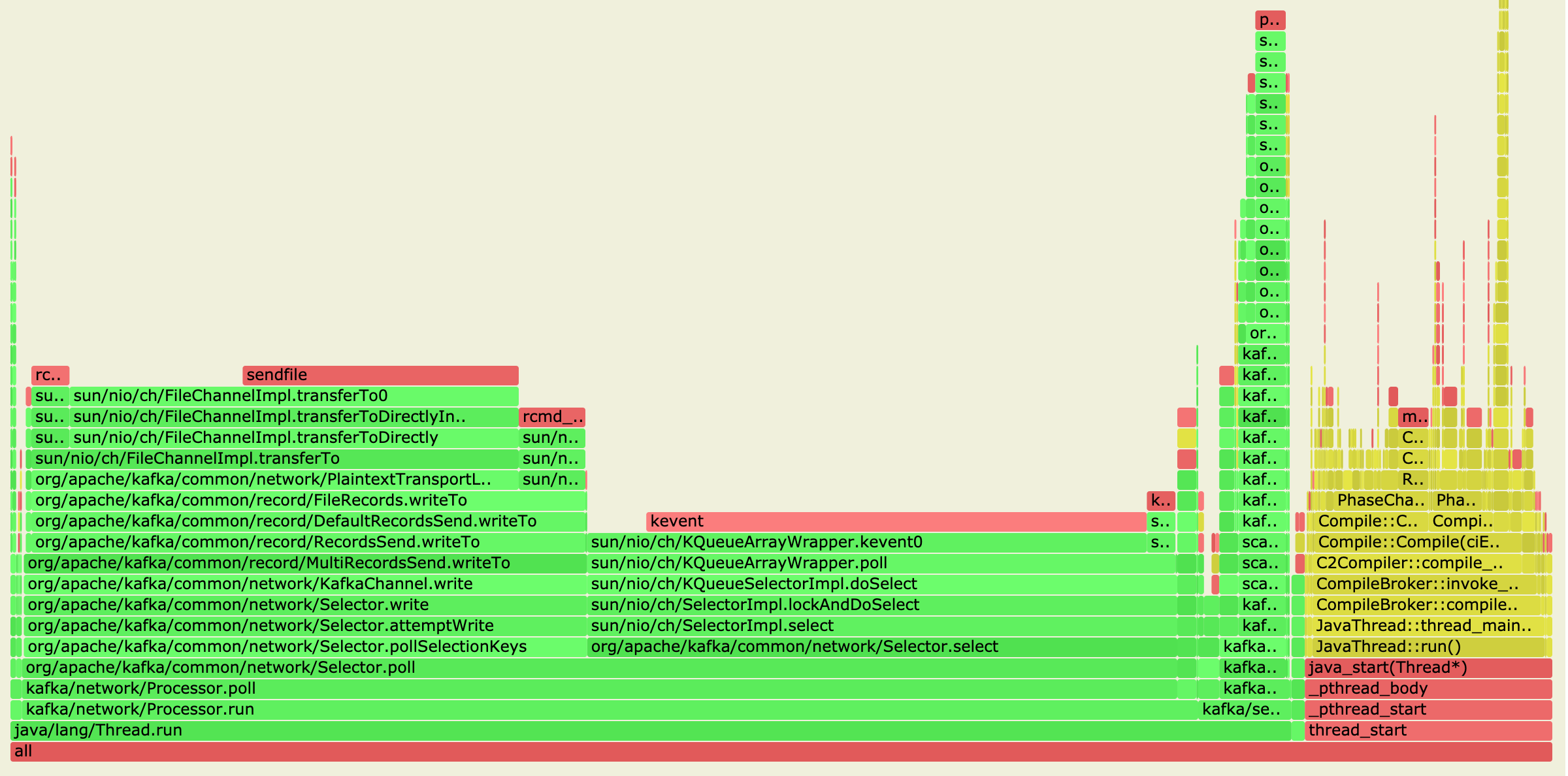
I ran the consumer perf test (at @hachikuji's suggestion) and took a profile. Throughput was around 500MB/s on trunk and on this branch

image

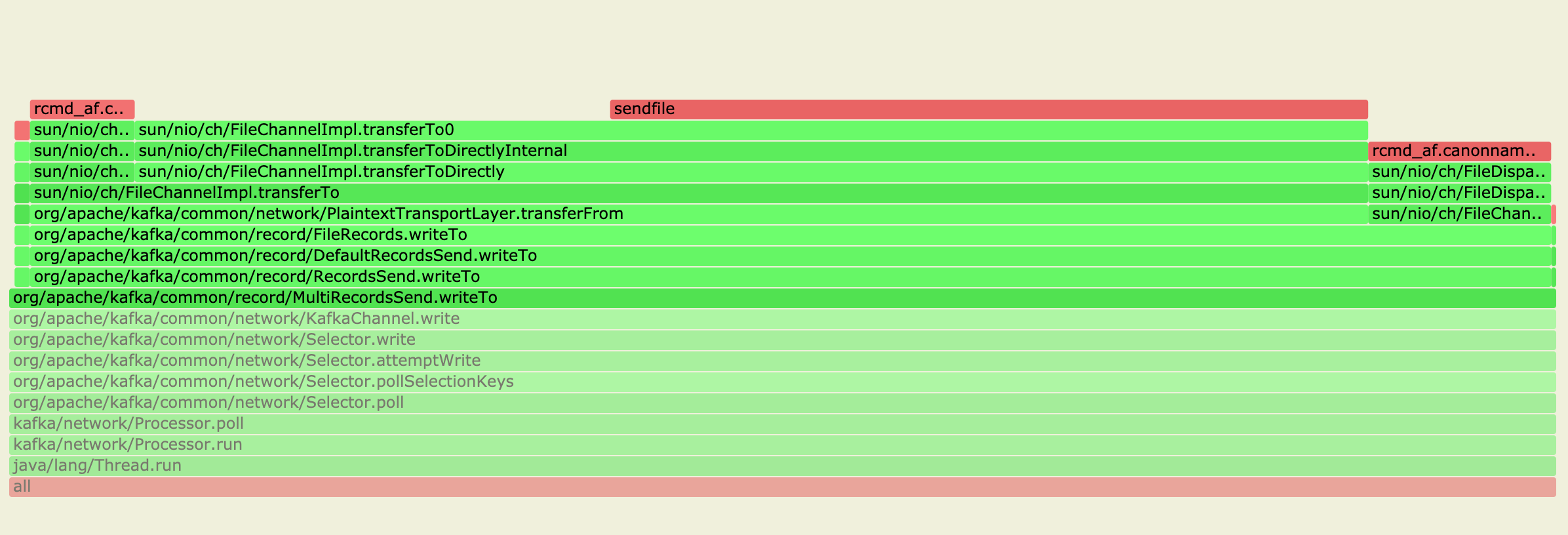
Zoomed in a bit on the records part:

image

This was with only a handful of partitions on a single broker (on my laptop), but it confirms that the new FetchResponse serialization is hitting the same sendfile path as the previous code.

@ijuma
Copy link
Copy Markdown
Member

ijuma commented Jul 29, 2020

What were the throughput numbers? I assume you meant the connsumer perf test, not console consumer.

@mumrah
Copy link
Copy Markdown
Member Author

mumrah commented Jul 29, 2020

@ijuma you're right, i meant the consumer perf test. I updated my comment to clarify

Copy link
Copy Markdown
Contributor

@hachikuji hachikuji left a comment

Choose a reason for hiding this comment

The reason will be displayed to describe this comment to others. Learn more.

LGTM. Great work on this patch!

@hachikuji
Copy link
Copy Markdown
Contributor

retest this please

2 similar comments
@hachikuji
Copy link
Copy Markdown
Contributor

retest this please

@mumrah
Copy link
Copy Markdown
Member Author

mumrah commented Jul 30, 2020

retest this please

@mumrah
Copy link
Copy Markdown
Member Author

mumrah commented Jul 30, 2020

These test failures are known flaky tests which already have jira tickets

@mumrah mumrah merged commit 4cd2396 into apache:trunk Jul 30, 2020
Sign up for free to join this conversation on GitHub. Already have an account? Sign in to comment

Labels

None yet

Projects

None yet

Development

Successfully merging this pull request may close these issues.

7 participants