bid32_to_binary32 and binary32_to_bid32 #3
Conversation


…nto ieee-decimal-conversions

|
This implementation was ported from https://www.intel.com/content/www/us/en/developer/articles/tool/intel-decimal-floating-point-math-library.html. Specifically, this is the bid32_to_binary32 implementation from bid_binarydecimal.c. Most of the other conversion methods in that file will also need to be ported. Reviews of this PR should have that implementation in mind. Notably, I have not tested this implementation yet. Any suggestions for how to properly test this appreciated. I'm not sure how portable the testing framework Intel provides is, and I don't know what we will be able to borrow from that. I'm probably going to work on binary32_to_bid32 next so we can at the very least have round trip tests. |

|
I added the reverse direction. I'm slightly concerned at the size of the code, especially given that we haven't touched larger types such as bid128 or binary64. I would also like to note that the more we rely on this intel implementation the less we can "copy paste" for implementing Decimal64 and Deicmal128. I imagine this will cause issues when we port things like Addition, because implementing it on all three types will no longer be "free" as we imagined it being. |

| bid_roundbound_128[((s & 1) << 1) + (int)(c_prov & 1)].Item2, // PORT: the calculation of this index factors in the rounding mode in the original code | ||
| bid_roundbound_128[((s & 1) << 1) + (int)(c_prov & 1)].Item1, | ||
| z.Item5, | ||
| z.Item4 |
There was a problem hiding this comment.
I will also generally note that porting this code can be very error prone. I happened to discover a typo I made last week in which this line was incorrectly z.Item3 instead of z.Item4. If I hadn't found it by chance, I am not sure how we would have ever found that bug. Even with exhaustive tests (which are still up in the air) I'd imagine debugging this code is a nightmare. We should keep this in mind when thinking about development cost.
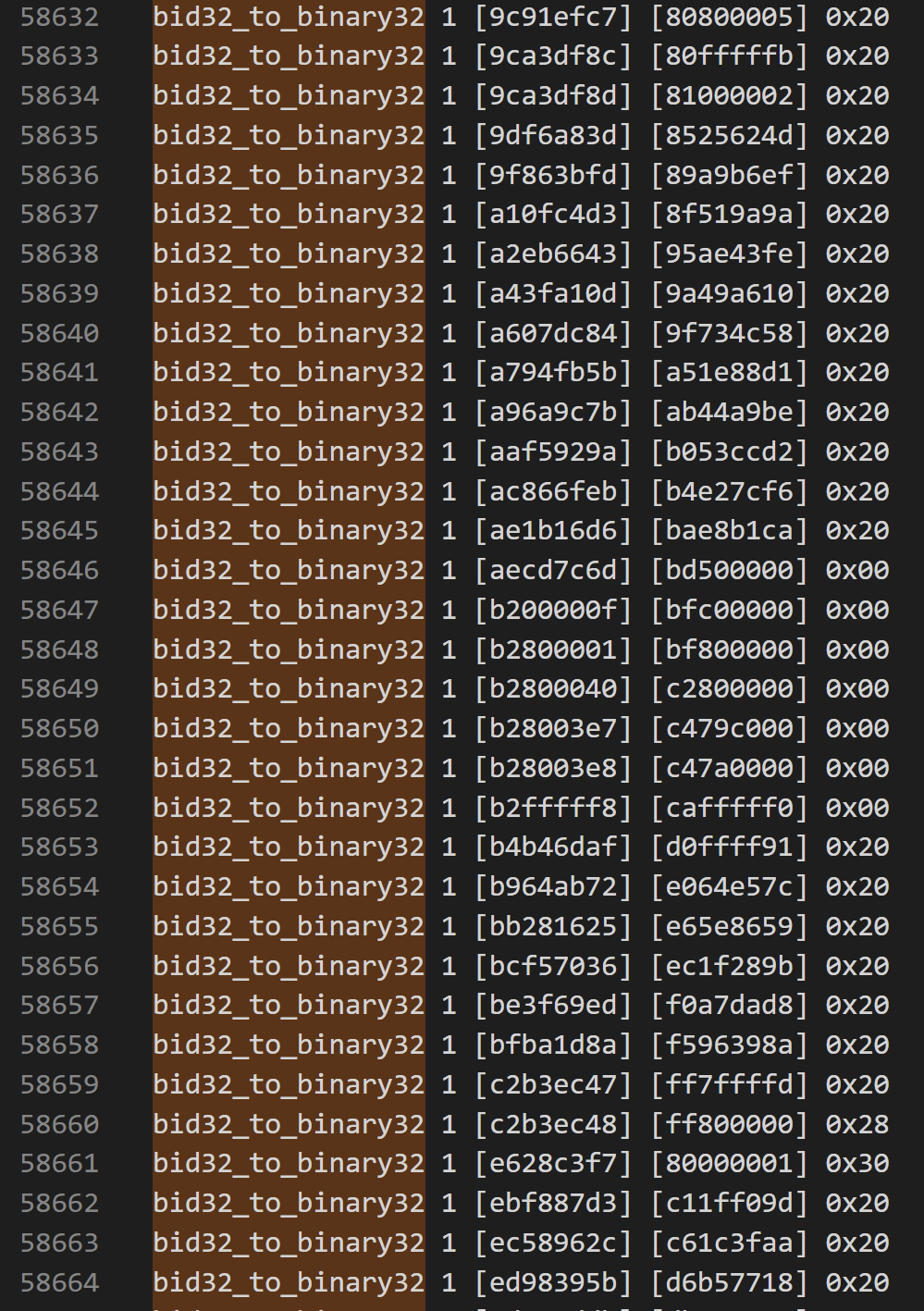
I think I found what I was looking for in
|
|
I added a couple passing test cases as examples. There are many more in the intel library that can eventually be manually ported with little difficulty. |

No description provided.