Conversation


2 extended files and 4 new files


|
-1 overly complex |

|
-1 Similar to @skinkie, I find the terminology in the pull request bizarre and was surprised this didn't include an actual vehicle inventory. Typically a coupling of rail cars/carriages is referred to as a consist, not parent/child. |

|
Thank you for your feedback! In order to ease the production and consumption of GTFS-Vehicles data, we are currently working on Best Practices and dataset examples that will be available soon. Some answers to the concerns that were expressed: Different filesThis proposal differentiates the data producers’ needs for vehicle description into 4 distinct files, so that every data producer can provide only the files that suit its needs:
Vehicle categoryThe reasons behind the term “vehicle category”, with a
Parent/ChildDifferent terms were needed to describe vehicle categories according to their nesting levels. We chose not to refer to the train terminology and use generic terms instead so that, if needed, all vehicle categories can be coupled. We are cautious, mostly because the GTFS spec must be backward compatible. The definition of parent and child vehicles could be added within the specification of Vehicle inventoryThis PR is a core version of GTFS-Vehicles (full version), which includes vehicle features and amenities. It means that this PR is compatible with a vehicle inventory, that would be done within As you may see in the full version, discussions are still ongoing about which features and amenities to include. However, the sections on vehicle coupling and boarding were less an issue, hence this PR. The same thing happened with GTFS-Pathways: a subset was adopted, and the full proposal is still on the table. |
I don't know who is "we" in this case. But if you could inform them that when mentioning a streetcar, metro, train they are talking about modes of transport, which we have standardised in GTFS as route_type. A vehicle type in a professional transit environment refers to the pink metro and the purple bus, or more specifically could aggregate trains consisting of multiple vehicle types in sequence.
Indeed, your thinktank tries to reinvented the wheel, introducing new terminology and new data models, while not improving or implementing best practises on the same topic. http://www.transmodel-cen.eu/category/tutorials/
Unrelated, pathways are directly affecting journey planning. Vehicle Types are merely properties. |
|
Hi everybody, I’m seeing that there are some concerns around the terminology used in this PR. To address these concerns, I would be thankful if you could offer your constructive feedback on the 3 questions below. It would be very great to have different points of view from several data producers/consumers. Thank you! “Vehicles” versus “vehicle types” versus “vehicle categories”In this PR, we do not want to describe vehicles one by one, but we would like to group them into types/categories upon their attributes. Currently in the GTFS spec:
Question 1: Should we use the term vehicle type or vehicle category? Option 1A:
In this proposal, the vehicle description is not based on an enum: the data producers can specify as many categories as required (trams, train sets, coupled trains, carriages, buses, boats, aerial lifts, etc). Following this choice, the term of vehicle category will remain in this PR. Option 1B:
Following this choice, the term of vehicle category in this PR will be replaced by vehicle type. "Train/carriage" versus "parent/child"In this PR, we would like to describe that several vehicle types/categories may be coupled to form a composed vehicle type/category. Currently in the GTFS spec:
Currently in operation:
Question 2: Should we use the terms train/carriage or parent/child? Option 2A:
Following this choice, the terms of parent and child will remain in this PR. Option 2B:
Following this choice, the terms of parent and child in this PR will be respectively replaced by train and carriage. The bus with trailer operated by MVG would be considered as a train (bus train?) composed of 2 carriages (1 standard bus, 1 bus trailer). The aerial lift in Grenoble would be considered as a train (aerial train?) composed of 4 to 5 carriages (4 to 5 gondolas). Question 3: Should we allow 3 nesting levels for vehicle coupling? Option 3A:
Following this choice, the 3 nesting levels as proposed in this PR will remain. The coupled TGV train would be defined in the spec as a grandparent vehicle (or a coupled train) composed of 2 parent vehicles (or 2 trains), each parent vehicle (or each train) composed of 8 child vehicles (or 8 carriages). Option 3B:
Following this choice, the 3 nesting levels in this PR will be replaced by 2 nesting level. In a dataset, the coupled TGV train would be defined separately from the regular TGV train set: the coupled TGV train would be a parent vehicle (or a train) composed of 2 child vehicles (or 2 carriages); and the regular TGV train set would be a parent vehicle (or a train) composed of 8 child vehicles (or 8 carriages). |
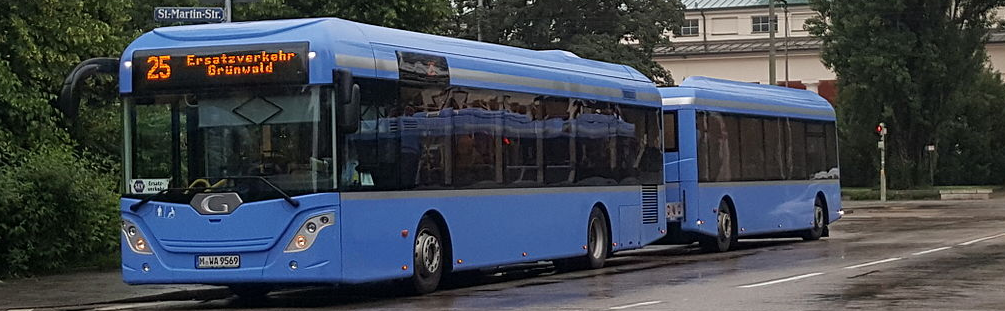

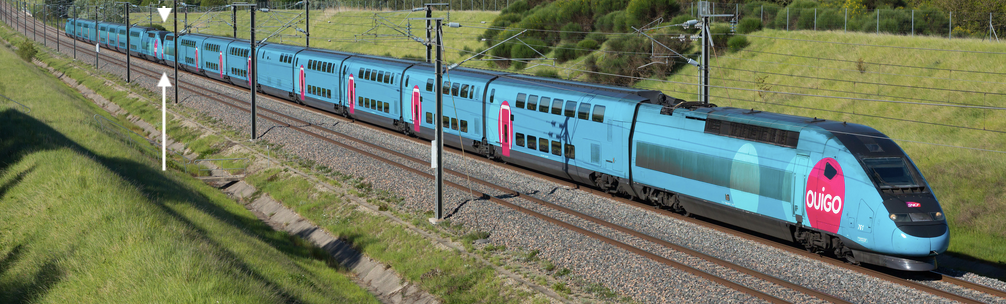
|
First of all. To me it feels that your organisation more and more starts acting as some sort of lobbying organisation. Lobby has nothing to do in a standardisation process or ecosystem. It is counter productive and it does not help the group in a good direction. Especially since more people already mentioned that what you are trying to standardise has been solved in the field with different wording. The reply of Tim again suggests that there is some sort of silent agreement this should be ignored.
No where in the specification is mentioned that a type must be an enumeration. Assuming this is a fallacy. I can give a clear example where direction_id is not an id type, but a 0/1. In the same fashion monday-friday have been retyped to enum, while in my perspective this always has been a boolean field. Hence there are no strict definitions of suffixes and are not consistently used, nor enforced.
The comments of existing fields are unrelated to a new field. We have not agreed that the _type suffix is limited to an enumeration, neither that an enumeration must have a _type suffix.
I cannot see any specification of which the suffix _category has been defined in such broad way. Neither has _category be mentioned anywhere in the specification https://gtfs.org/reference/static
Again, this is an invented wording that does not match the suggestions and common practices. A coupled bus, tram or aerial lift is not a train.
Lets first start to define what exactly we want to model. Is it: |

|
If I understand correctly, the two main points which are getting discussed on this pull request are about naming ( I see as a good sign that the two remaining issues in the proposal are about naming. It shows that there is a consensus on the modeling and on the definitions. If the naming that MobilityData chose (namely me, @LeoFrachet, since you were asking) has flaws which can be fixed, let's do it. As you know I'm not a native anglophone and my English isn't perfect. As Tim explained:
We are paid (by our members) to draft specifications, to have opinions and to defend them, but not to vote. So let's ask the community what is clearer for them. Our goal is to make the spec as clear as possible, and if vehicle_type is clearer for the community, then it's the right choice and we'll be happy to embrace it. So, community, let's do an informal vote, to help us choose the clearer option for those two questions. |
|
GTFS Community, please give us your prefered option on the two following questions (it’s an informal vote, outside of The Official Process): Question A: To describe groups of vehicles that share the same features (e.g. number of doors, seats, bike spots), and which are defined by each GTFS producer, would use the term:
MobilityData opinion: A1, since “..._type” have been enum in the past in GTFS so “..._categories” may be clearer that they depend on the producer, but we can also extend the concept of “..._type” if you do not see it as confusing. Question B: To describe vehicle coupling (e.g. 1 train made of 7 carriages; 1 bus with trailer made of 1 standard bus and 1 separated trailer; 1 gondola set made of 5 gondolas in a row), would you:
MobilityData opinion: B1, since parent/child is more generic and is less confusing when the vehicle isn’t on a track (articulated buses referred as “train” could be confusing), but if train/carriage is clearer for you and less confusing, let’s do it. Pinging:
|
For me this is exactly the problem @LeoFrachet. Don't ask the community but your members to step into the discussion. Don't ask their money but their participation in the process, instead of some capital they surely can miss anyway. The community in investing a significant amount of time that is unpaid for, the least you you make your members do is to actively participate, not in the voting process, but the drafting process and discussions such as these. |
We need to go one step back for the naming. What does this proposal want to achieve in the future? Is this proposal only a way to identify a formation of carriages, with an order and subelement. For example to model a locomotive, bistro, passenger combination combination. Something would also be approachable from a tram, an articulated bus to describe the number of seats in certain parts. Or is the wish to model a specific transit thing (called a JourneyPart) where a certain part of a vehicle is operating on a trip, but not the full trip, where passengers sometimes can move freely, but must have an exact reference at uncoupling in a future moment in time. For me the above subjects are extremely closely related, especially since I made the mistake to actually implement another transit standard called RailML. |

|
A: for sure not A2, but maybe even A1 is confusing. We can have multiple "categories" (in your example: cat1: number of doors, cat2: number of seats, cat3: number of bike spots). In my view these are "dimensions" and each vehicle has a value in each dimension: cat1: 3 doors, cat2: 60 seats, cat3: 6 bike spots B: B1 |

|
Question 1: (For me) a vehicle type is a train, a bus, ... as used by route_type and location_type, which means vehicle_type (1A) would be confusing. But the use cases for this data wouldn't be to group all vehicles with 3 doors or 50 seats, but for example to differentiate between non-articulated and articulated buses, or maybe more specific between each type of bus (Let's say Volvo B1, B2 or a Scania B5, I know nothing about bus types). Between different train types, for example an M4,M5,M6 carriage. In this case you'd be specifying a vehicle (type), which leads to 1A, even though it'd be confusing. A vehicle (without the type) would imply one specific vehicle with a certain number plate or id, so that isn't an option either. Question 2: I agree with @skinkie that question 2 needs to be more clear as to what the exact goal is. 2A: There is a train which splits up and joins another train later on. Are there 2 "parent vehicles" which are splitting, of which one is joining a 3rd parent vehicle later? This would mean a parent can have another parent? Or is it one parent vehicle splitting of a child vehicle, but would that mean that there would be a "child vehicle" travelling alone for a part of its journey. 2B: Having a "train" as "root element" would be confusing, as it would also be used for trams and other means of transport. Question 3: 3B, 2 levels. A formation of two trains, 8 carriages each, would be 16 carriages where you cannot pass from carriage 8 to carriage 9 (assuming you can enter the steering carriages). 3A becomes complicated when the two trains would split (do the new trains get a grandparent?), whereas in 3B one formation would simply become two formations. |


|
Maybe I'm missing something, but I don't see the linkage between vehicle category and vehicle occupancy as mentioned in the needs that would be addressed. I had expected that the information in GTFS-realtime VehiclePositions would be linked to information about the features of a vehicle, but I don't see how you can connect the vehicle.id field in VehiclePositions to vehicle_category, unless you provide yet another table that links vehicle_id to vehicle_category. Why not just provide a vehicles table instead of a vehicle category table? At Metro Transit it would be easier for us to provide a table of vehicles than vehicle categories (our information about vehicles is at the individual vehicle level, we sometimes modify seating in vehicles, but not for the entire series of that vehicles) and it would still result in less duplication than something like trip_headsign in the trips table. Is there not even a strong consensus on a few vehicle attributes that could be included in this pull request (seated capacity, standing_capacity), to motivate its use? Finally, we have a single line (commuter rail) that is restricted to a single vehicle type on any single route or trip. Although we are often consistent in the type of bus used on a trip, it's not a rule, and it does change. So all of the GTFS-Vehicles extensions to static files are pretty much useless for our service. But we do want a standard way of sharing vehicle information with other consumers for things like occupancy status, and realtime departure and occupancy prediction generation. For me, the minimal initial implementation would be a vehicles.txt file with |

|
This pull request has been automatically marked as stale because it has not had recent activity. It will be closed if no further activity occurs. Thank you for your contributions. |
 stale
bot
added
the
Status: Stale
stale
bot
added
the
Status: Stale
|
This pull request has been closed due to inactivity. Pull requests can always be reopened after they have been closed. See the Specification Amendment Process. |

.jpg)


8 participants


Context
Currently, the GTFS specification does not provide any vehicle information besides
routes.route_type,trips.wheelchair_accessible, andtrips.bike_allowed. However, most transit agencies have data on vehicles they operate, which could enhance passenger information provided in GTFS format.The following needs could be addressed with vehicle data:
pathways.txtalready provides step-free trip plans through stations only).OccupancyStatusinVehiclePositionis still experimental, and the scale of crowdedness is relatively subjective.Pull Request
This PR is a core version of a broader GTFS-Vehicles extension proposal.
The goal of the current PR is:
vehicle_categories.txtandvehicle_couplings.txt;routes.txt,trips.txt, and/orvehicle_allocations.txt;vehicle_boardings.txt.This PR suggests the extension or the addition of:
routes.txt(1 new field);trips.txt(1 new field);vehicle_categories.txt(new file);vehicle_allocations.txt(new file);vehicle_couplings.txt(new file);vehicle_boardings.txt(new file).Compared to GTFS-Vehicles full version (still at the discussion stage), this PR does not include, mainly:
vehicle_categories.txt;vehicle_doors.txtandvehicle_boardings.txt;stop_times.txt;OccupancyDescriptor.Links
GTFS-Vehicles (Core version) - this PR: http://bit.ly/gtfs-vehicles-core
GTFS-Vehicles (Full version): http://bit.ly/gtfs-vehicles