Seoul AI Gym is a toolkit for developing AI algorithms.
This gym simulates environments and enables you to apply any teaching technique on agent.

Seoul AI Gym was inspired by OpenAI gym and tries to follow its API very closely.
There are two terms that are important to understand: Environment and Agent.
An environment is a world (simulation) with which an agent can interact. An agent can observe a world and act based on its decision.
seoulai-gym provides environments.
An example of creating environment:
import seoulai_gym as gym
env = gym.make("Checkers")
Every environment has three important methods: reset, step and render.
Reset an environment to default state and return observation of default state.
observation data structure depends on environment and is described separately for each environment.
Perform an action on behalf of agent in environment lastly observed by either reset or step.
An action can differ among different environments but the return value of step method is always same.
A reward is given to an agent when action that was done in the current step or some of the previous steps have led to a positive outcome for an agent (e.g winning a game).
An info is a dictionary containing extra information about performed action.
Display state of game on a screen.
There are two ways to install seoulai-gym.
The recommended way for developers creating an agent is to install seoulai-gym using pip3.
pip3 install seoulai-gym
You can also clone and install seoulai-gym from source.
This option is for developers that want to create new environments or modify existing ones.
git clone https://github.com/seoulai/gym.git
cd gym
pip3 install -e .seoulai-gym requires to have at least Python 3.6 and was tested on Arch Linux, macOS High Sierra and Windows 10.
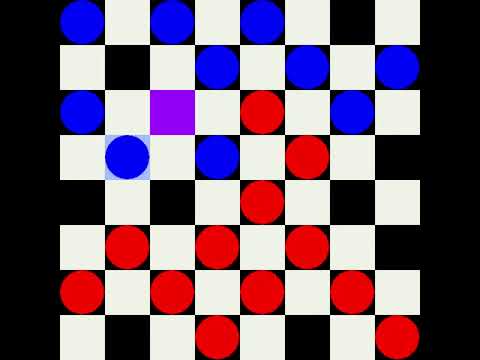
Currently, environment simulating game of Checkers, [Mighty] (https://en.wikipedia.org/wiki/Mighty_(card_game)), and Market are provided.
-
Checkers
import seoulai_gym as gym
env = gym.make("Checkers")
env.reset()
env.render()
-
Mighty
import seoulai_gym as gym
from seoulai_gym.envs.mighty.agent.RandomAgent import RandomAgent

env = gym.make("Mighty")
players = [RandomAgent("Agent 1", 0),
            RandomAgent("Agent 2", 1),
            RandomAgent("Agent 3", 2),
            RandomAgent("Agent 4", 3),
            RandomAgent("Agent 5", 4)]
obs = env.reset()
obs["game"].players = [
  players[0]._name,
  players[1]._name,
  players[2]._name,
  players[3]._name,
  players[4]._name,
  ]
env.render()
-
Market
import seoulai_gym as gym
from seoulai_gym.envs.traders.agents import RandomAgentBuffett

# make enviroment
env = gym.make("Market")

# select exchange
env.select("upbit")

init_cash = 100000000  # KRW
a1 = RandomAgentBuffett("Buffett", init_cash)
current_agent = a1

env.reset()
env.render()
-
Checkers
-
Mighty
-
Market

All test are written using pytest. You can run them via:
pytest