I am Silvino Medina Cardona, student of the Bachelor’s Degree in Video Games by UPC at CITM. This content is generated for the second year’s subject Project 2, under supervision of lecturer Marc Garrigó.
- Introduction
- General problems
- Tutorial main objective
- Tutorial types
- How to make an amazing tutorial
- Conclusion
- Bibliography
As we all know, the first impression that a player has with a game is very important, because it can determine whether the player gets engaged with the game and continue playing or leaves the game due to the lack of persuasion and fun of those first minutes. Tutorials are most of the times the first thing that the player comes into contact with, so they must provide, apart from the main goal of a tutorial, the suficient persuasion, fun and entertainment to maintain the player engaged with the game.
Before explaining which is the main goal of a tutorial and what it consists of, I think it is important to explain a general problems that happens sometimes. As they must be a very short fragment of the game and have to concentrate a lot of information, they sometimes happen to bore the players or even make him feel overwhelmed with so much information. Apart from that, even if the game is awesome, if the tutorial is not good it can affect the whole player experience.

The main objective of a tutorial is to introduce the player all the information that he will need in orther to have a great experience during the game. Within all this information we include the context were the player is going to be inmersed, the mechanics and obviously the controls of the game.
First of all, the context is necessary to show the player the world where he is going to play, something about the story plot, how is the character or even a basic explanation of the world rules.
Secondly, show mechanics to the player is fundamental to show what is he going to do, which are the rules of the game but also let him discover some mechanics by his own.
Finally, and for me the most important one, is to teach the player how to interact with the game. Although tutorial design has nothing to do with the correct choice of the controls, I want to make a mention on how important is to make the choice as intuitive and easy as possible to provide a perfect interaction between the player and the gameplay.
Apart from all that, it is important to take into account that a tutorial does not necessarilly have to be anchored at the start of the game, because as I said before, the aim is to teach the player all the information needed to have a great experience, which thing can be explained at any point ofthe game.
Let's take a look at different ways of tackling this, from worst to best, and see what we can learn from them.
This is the worst kind of tutorial. Due to some years ago phisycal distribution was the only way of distribution, companies took advantage of it introducing a paper manual where all the controls, mechanics and information of the game were explained. By using this strategy they didn't have to introduce a tutorial in the game itself, players oly had to read the instruction manual.
Nowadays, due to digital distribution is becoming more and more common this strategy can not be done, so lots of companies decide not to introduce a tutorial and let the players discover how the game works by themselves. In some cases this can work, but in many others players can´t understand some specific aspects of the game, which can affect their experience playing it.
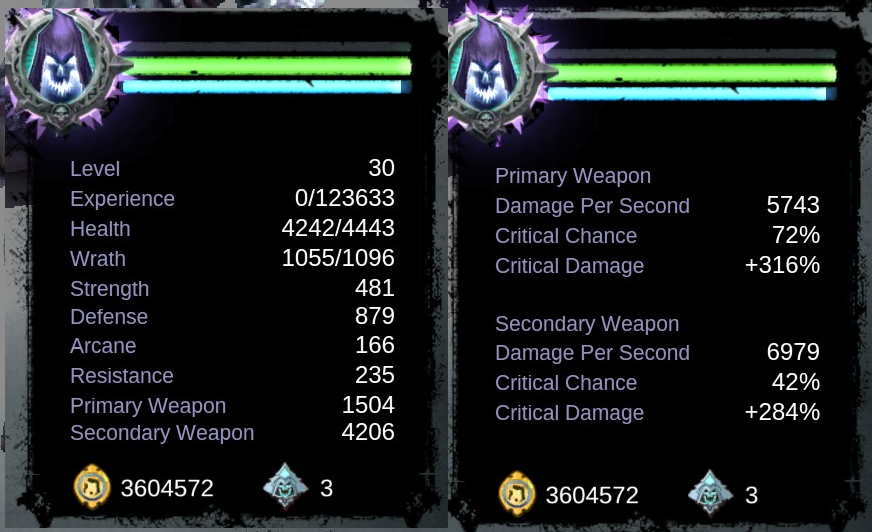
A good example is the way stats are handled in Darksiders 2, because like any game with a loot system, has lots of statistics that define the player character. Some are staples of the genre and pretty easy to understand (health, strength, defence), but there is one particular stat (Arcane) that has no obvious meaning and there is no way for the player to know for sure without looking outside the game for information.
We can define this type of tutorial as the easiest one to implement and one of the least effective. The tutorial by exposition is any tutorial which consists of telling or showing the player how something is done outside of actual gameplay. This includes, but is not limited to, the likes of text explanations prefacing gameplay and the traditional “controls” screen. As I said earlier, this type of tutorial is not very effective, and can even cause more confusion than it does clarity. This can be produced by two diferent reasons:
- The first one is because normally when people see this "controls" screens don't want to read it and tend to pass it away.
- The second one is because even if you spend some time reading it, once the gameplay starts people typically don't remember what they have just read.
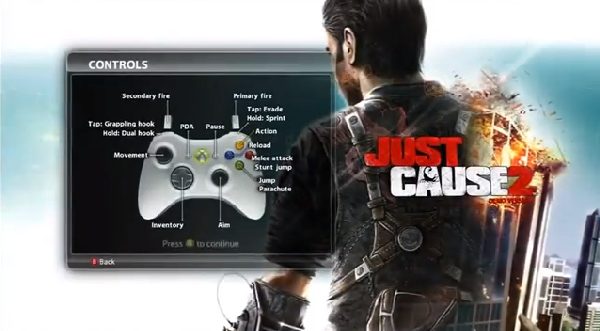
This leads us to the biggest issue with this tutorial type: context. Mechanics and controls for games can often be quite numerous and complicated, but the player is typically eased into them through the context of relevant gameplay scenarios. Attempting to present the player with most or all of the information up front will simply lead to them not understanding or not remembering most of it. The two ways games with this tutorial type typically tackle this issue is to either present particular information only when it is relevant, or to allow their tutorial to be constantly revisited by a menu. Both of these approaches are annoying and hurt pacing by constantly stopping gameplay.
A good example of this is just about any Devil May Cry game which, like any other beat-‘em-up, has a move list. Constantly needing to pause the game to look at this menu and remember the commands required for certain moves is really annoying. Unfortunately, this type of thing can be difficult to avoid, as walking the player through the use of every possible move would be extremely tedious.

The tutorial room is a section of gameplay that is walked by the player where the actions he need to know are learned in order to play properly. This almost always takes place in a separate area or level not seen in any actual gameplay, and is quite frequently optional.
When thinking about tutorials, what comes to mind at first is tutorial's romm type, because it was the most used one during the last console generation, and is also one of the only types of tutorial which is often called a tutorial in-game.
A perfect example would be the tutorial for Jamestown: Legend of the Lost Colony, an indie scrolling shooter made by Final Form Games. This specific tutorial perfectly depicts the essence of the tutorial room and why it can be an effective way of showing a player how your game works. The tutorial is short and everything you are told is clearly demonstrated.

Althoug this seems the perfect way to do a tutorial, is far from it. It can be a very good way to show players how a game works in simple games with easy and simple mechanics, but in certain types of games with more complex mechanics it may not be as effective.
The contextual lesson type is basically a system where the one tutorial room is chopped into little pieces and added organically throughout the gameplay of a title.
The biggest drawback of this type of tutorials is that the game will simply wait for you to press an specific button and won't let you progress until you have done it. The problem is that this can become a little bit monotonous and boring and although in the case of Uncharted 3 is very short and the player doesn't usually end up bored in others games maybe it is not like that.
A very good example of this type of tutorial is Uncharted 3. in this game, the gameplay is briefly paused and instructions on what buttons perform the action immediately required pop up on screen. This part of the tutorial is incredibly short, because it only presents what you need to know at the specific moment by sending pop ups, and this part of the gameplay has literally no impact in the rest of the game, it is only done for the tutorial.

There is a subtype of the contextual lesson type called "The thematically relevant contextual lesson". The difference between both of them is that this subtype is generally presented in a thematically relevant way during gameplay, rather that the usual one used.
This includes things like arrow keys being carved on the back of a cave wall at the beginning of a platformer, or the spacebar and a little jumping guy being drawn on the wall before a platformer's first ledge, or even squad mates telling you how to take cover when you enter your first firefight. This kind of tutorial is awesome because it's incredibly easy to implement and feels really slick, with instructions blending seamlessly with the gameplay experience.

At the begining we started with a tutorial type called "No tutorial", and now we are anding with another one called "No tutorial". It may seem like this doesn't make no sense at all, but it actually has a lot of sense. Just as the first tutorial type is the worst one, having no tutorial at all is also the best, and this has everything to do with the inherent nature of video games.
A tutorial fundamentally shows an explanation of all the rules of the game, showing the player all the information needed to understand it and overcoming obstacles. Just like in any other type of game, the fun in video games comes from actually playing them, rather than learning how each game works.
However, due to their guided nature, video games present an opportunity unseen in most other forms of games: the ability to include the teaching aspect as part of the game itself. That's where not having a tutorial comes in.
Two examples of games that perfectly reflect this type of tutorials and that are more than known in our society are the Super Mario Bross saga and Pacman. None of them have a tutorial but both of them show the players how to play the videogame. In the image below we can see how Super Mario Bross show the players that they can double jump. What they do is to add a series of coins in such a way that it shows the player that there is an option to take them all. At that moment, the player realizes that there must be a double jump that allows him to perform that specific action.

In this section I am going to show you some tips to make your tutorial better and make the players not want to pass it.
Something very important to keep in mind is that when someone run a game he/she only wants to play. Most of the people come from work, school or just a long day, so what they want is forget everything and stop paying attention to anything else. So that, the perfect tip would be "Don't teach, but let them learn". A perfect way of doing this is by aplying the tangencial learning, which is a process by which people self-educate if a topic is exposed to them in a context that they already enjoy.
First of all it's important to explain what "flow" in videogames means. We can define it as a mental state where a person is absolutely concentrated, unaware of the surroundings and using every mental process on what they are doing. The objective is that the player does not even realize that he has been playing for two hours.
So, by applying this concept, our objective is reaching a flowing tutorial by increasing the challenge as the player gets skilled. Put across a challenge. Let the player deal with it. Put another once he has reached the ability to overcome it. Flow between the overwhelm of a new challenge, the light struggle to complete it and the excitement of overcome.

A perfect example of a perfect learning curve would be Portal. The entire game is basically a tutorial on how to beat it, except it expertly frames the learning as gameplay. Portal challenges by crafting puzzles around new mechanics and new applications of existing mechanics. It allows all the time players need to get comfortable with the controls or to think about how to solve the next puzzle, and it scales the difficulty by simply incrementing the complexity. And finally, for me the best about this game is that what you learn by completing one specific puzzle is needed to figure the next one, making it a perfect way to improve your skills in each level.

A very important thing to take into acount is that not everybody acquire information in the same way, because each person has its own way of learning. This concret topic has been studied by lots of psycchologists and some of them afirm that there are more than 70 ways of learning, but we are going to focus on the Vark model.
This concret model identifies 4 differents types of learners: Visual, Auditory, Physical(kinesthetic) and Social. The idea is to keep in mind all of them by representing ideas with images for Visual learners, making use of audio feedback for Auditory learners, let them learn through trial and error for Physical learners and finally let them see others fail for Social learners.
-
Comfort: The fact that the player feels comfortable and feels that he can experiment, practice and doesn't feel like there are unnecessary elements is very important. The objective is to don't overflow the screen with things he doesn't undestand or doesn't have to yet. The perfect definition would be to keep things clear as much clear and simple as you can.
-
Excite: Show him the possibilities that your gameplay has, not only the easiest part or the simplest part. Your game will probably start with a battle with simple soldiers and will end with a dragon battle, so show the player a little hint of what is going to come after.
-
Respect: Don't treat the player as a robot that given a command repeats exactly the same one. The goal is to ask them to do something and let them figure it out.
-
Teach: As it's obvious, the objective is that the player ends up with all things clear, so by letting them learn by themselves this objective will arrive easilly.

Instead of teaching a player one specific mechanic of the game by sending him a pop up with a text explaining what to do, it's better to show it to him by an existent mechanic that the player already knows. For example, we want to teach that behind some walls there is hidden treasure, but they have to be destroyed first. We can use a pop-up with a text explaining what to do, but as we said before we want to avoid texts and we want to use a mechanic to explain it. So, the perfect way of doing it is by adding an enemy just in front of the wall and let the player kill him and inevitably reach the wall, destroying it and revealing the treasure. By doing this, we haven't said a word, we haven't pointed anything, the player itself discovered it and now he's feeling smart.
-
People don't like to read, and as the saying goes, an image is worth than a thousand words, so try to write down the least words as possible.
-
Don't be tasteless. Don't ruin your game aesthetic with unecessary "tutorial" elements like pop-ups, moving arrows, glowing fingers, etc.
-
Make the most important information always accesible. Although overinformation can be overwhelming, the lack of it is confusing and undesirable, so try to add an "info" tab on the menu or something that can give the necessary information to the player in any moment of the game.
If you think about a really blowing mind tutorial you might have some trouble, since the most likely is that all the tutorials you have played in your life contained a series of elements that bored you or that you wanted to pass. This does not mean that there aren't good tutorials, but those that are good, people don't tend to remember them, since they are made in such a way that they do not give rise to think that they are a tutorial.
The best tutorial is the one nobody remembers.