Currently, blocks.assemble expects all datafile frames to be in memory simultaneously for merging
|
# Concatenate all rgroups |
Unfortunately, there are some platform-dependent memory allocation issues that are likely out of blocks' control where Linux requires 2x the expected memory for blocks.assemble (see attached profiling).
One idea is to add a mode to blocks.assemble that would only hold two frames in memory at once (the partially assembled one and the next datafile frame to merge). It's unclear if this would work around the underlying memory allocation issue on Linux, but could be worth a shot and would generally improve memory usage.
Memory profile assembling 15 GB of data on Mac
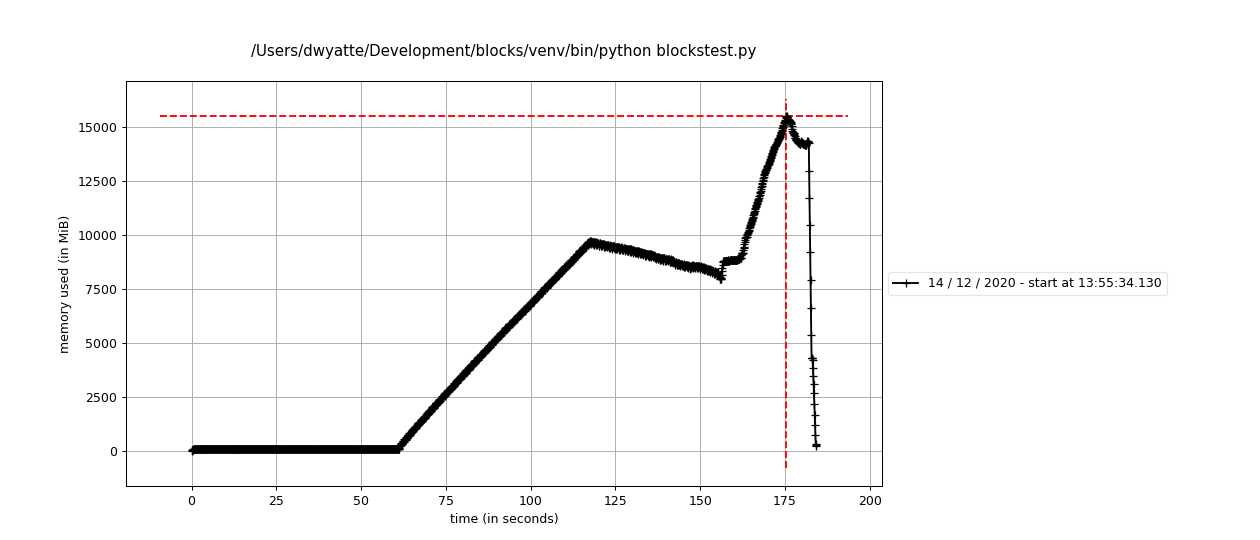
Line #    Mem usage    Increment  Occurences   Line Contents
============================================================
    30   86.297 MiB   86.297 MiB           1   @profile
    31                                         def assemble(
    32                                             path: str,
    33                                             cgroups: Optional[Sequence[cgroup]] = None,
    34                                             rgroups: Optional[Sequence[rgroup]] = None,
    35                                             read_args: Any = {},
    36                                             cgroup_args: Dict[cgroup, Any] = {},
    37                                             merge: str = "inner",
    38                                             filesystem: FileSystem = GCSFileSystem(),
    39                                         ) -> pd.DataFrame:
    74   86.438 MiB    0.141 MiB           1       grouped = _collect(path, cgroups, rgroups, filesystem)
    75
    76                                             # ----------------------------------------
    77                                             # Concatenate all rgroups
    78                                             # ----------------------------------------
    79   86.438 MiB    0.000 MiB           1       frames = []
    80
    81  731.676 MiB -3327.988 MiB           2       for group in grouped:
    82   86.438 MiB    0.000 MiB           1           datafiles = grouped[group]
    83   86.438 MiB    0.000 MiB           1           args = read_args.copy()
    84   86.438 MiB    0.000 MiB           1           if group in cgroup_args:
    85                                                     args.update(cgroup_args[group])
    86 4059.664 MiB -184418.691 MiB         403           frames.append(pd.concat(read_df(d, **args) for d in datafiles))
    87
    88                                             # ----------------------------------------
    89                                             # Merge all cgroups
    90                                             # ----------------------------------------
    91  731.691 MiB    0.016 MiB           1       df = _merge_all(frames, merge=merge)
    92
    93                                             # ----------------------------------------
    94                                             # Delete temporary files
    95                                             # ----------------------------------------
    96  731.746 MiB    0.016 MiB         201       for file in datafiles:
    97  731.746 MiB    0.039 MiB         200           if hasattr(file.handle, "name"):
    98                                                     tmp_file_path = file.handle.name
    99                                                     if os.path.exists(tmp_file_path):
   100                                                         os.remove(file.handle.name)
   101  731.754 MiB    0.008 MiB           1       return df
Memory profile assembling 15 GB of data on Linux
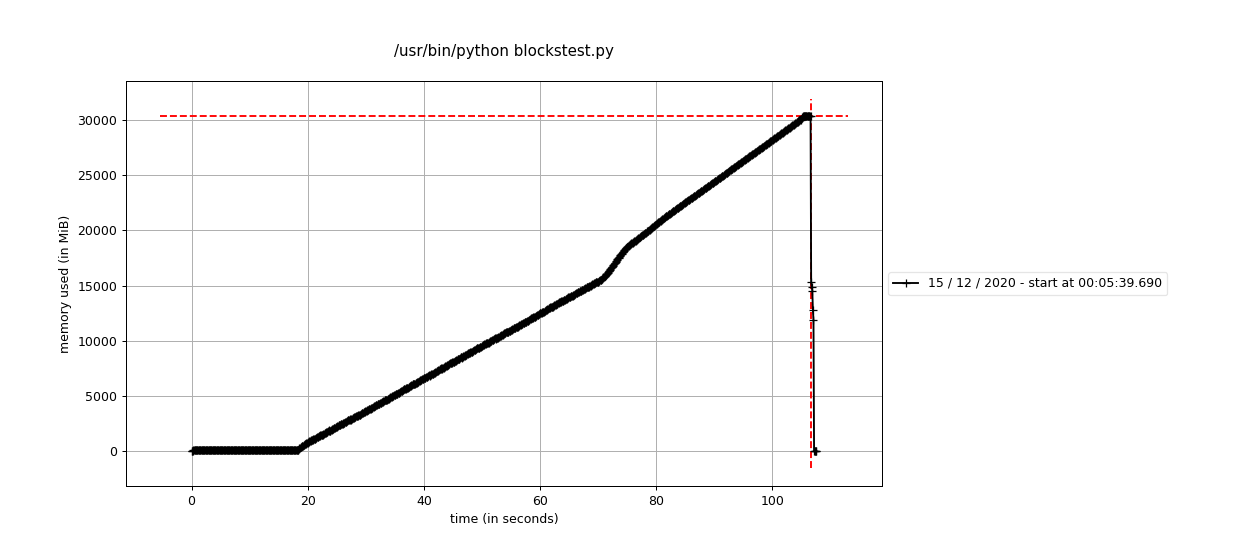
Line #    Mem usage    Increment  Occurences   Line Contents
============================================================
    30  104.570 MiB  104.570 MiB           1   @profile
    31                                         def assemble(
    32                                             path: str,
    33                                             cgroups: Optional[Sequence[cgroup]] = None,
    34                                             rgroups: Optional[Sequence[rgroup]] = None,
    35                                             read_args: Any = {},
    36                                             cgroup_args: Dict[cgroup, Any] = {},
    37                                             merge: str = "inner",
    38                                             filesystem: FileSystem = GCSFileSystem(),
    39                                         ) -> pd.DataFrame:
    74  104.805 MiB    0.234 MiB           1       grouped = _collect(path, cgroups, rgroups, filesystem)
    75
    76                                             # ----------------------------------------
    77                                             # Concatenate all rgroups
    78                                             # ----------------------------------------
    79  104.805 MiB    0.000 MiB           1       frames = []
    80
    81 30356.867 MiB    0.000 MiB           2       for group in grouped:
    82  104.805 MiB    0.000 MiB           1           datafiles = grouped[group]
    83  104.805 MiB    0.000 MiB           1           args = read_args.copy()
    84  104.805 MiB    0.000 MiB           1           if group in cgroup_args:
    85                                                     args.update(cgroup_args[group])
    86 30356.867 MiB 30248.691 MiB         403           frames.append(pd.concat(read_df(d, **args) for d in datafiles))
    87
    88                                             # ----------------------------------------
    89                                             # Merge all cgroups
    90                                             # ----------------------------------------
    91 30356.867 MiB    0.000 MiB           1       df = _merge_all(frames, merge=merge)
    92
    93                                             # ----------------------------------------
    94                                             # Delete temporary files
    95                                             # ----------------------------------------
    96 30356.867 MiB    0.000 MiB         201       for file in datafiles:
    97 30356.867 MiB    0.000 MiB         200           if hasattr(file.handle, "name"):
    98                                                     tmp_file_path = file.handle.name
    99                                                     if os.path.exists(tmp_file_path):
   100                                                         os.remove(file.handle.name)
   101 30356.867 MiB    0.000 MiB           1       return df

Currently,
blocks.assembleexpects all datafile frames to be in memory simultaneously for mergingblocks/blocks/core.py
Line 77 in 5a19b13
Unfortunately, there are some platform-dependent memory allocation issues that are likely out of blocks' control where Linux requires 2x the expected memory for
blocks.assemble(see attached profiling).One idea is to add a mode to
blocks.assemblethat would only hold two frames in memory at once (the partially assembled one and the next datafile frame to merge). It's unclear if this would work around the underlying memory allocation issue on Linux, but could be worth a shot and would generally improve memory usage.Memory profile assembling 15 GB of data on Mac

Memory profile assembling 15 GB of data on Linux
