CSSM315 experiments
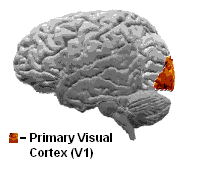
The primary visual cortex is the best-studied visual
area in the brain. It is the simplest, earliest
cortical visual area. It is highly specialized for
processing information about static and moving
objects and is excellent in pattern recognition.
David Marr proposed that the sight is constructed through a hierarchical / layered system of specialized receptors that deliver results inseparable from integrals and Gabor atoms. Let's state this theory as a falsifiable statement and design a series of experiments to test this theory.
The primary visual cortex (v1) is responsible for line detection. Can we design an experiment to prove the continuity of lines and the angle of lines?
Start with two statements:
- We see continuous lines even in cases where they do not exist.
- Groups of neurons tuned to detect three different angles provide enough information to determine the angle of any line.
We saw some indication in the grid illusion that we see lines where there are none. Can we compare our perception to what a machine sees? And more, could you make a machine that sees the same phantom lines?
Write software (that can run on smart phones?) that will generate sound grains in response to a line at a particular angle. Use different grain style for each of three angles: 0 degrees, 45 degrees, and 90 degrees. Point the phones at a moving line, a yardstick perhaps? Close eyes and see if you can determine the angle of the yardstick from listening to the grains.