MRG, ENH: Use datetime objects for meas_date #7124
Conversation


|
This is on its way to passing because the bug was already fixed in #7036. I'll re-title and eventually make this into a PR to use datetime objects with meas_date (hopefully). |
 larsoner
changed the title
larsoner
changed the title

Codecov Report
@@            Coverage Diff             @@
##           master    #7124      +/-   ##
==========================================
+ Coverage    89.7%   89.71%   +0.01%
==========================================
  Files         444      444
  Lines       78997    79091      +94
  Branches    12674    12689      +15
==========================================
+ Hits        70863    70956      +93
- Misses       5320     5322       +2
+ Partials 2814 2813 -1 |
|
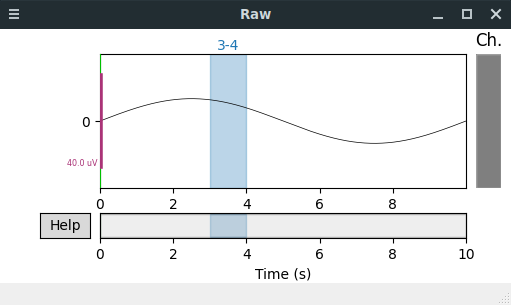
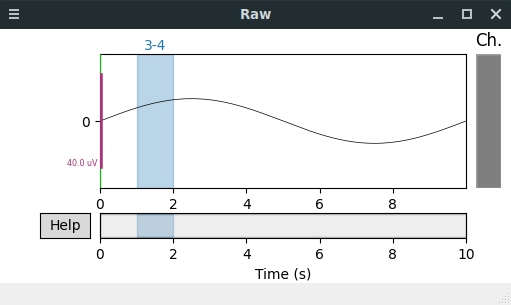
FYI I found a bug in Does something bad to the annotation:
It's fixed in this PR. And then I noticed that this same code does not produce an annotation in the same place when |
 larsoner
changed the title
larsoner
changed the title
|
Tests pass locally, this is ready for review/merge from my end |
larsoner
changed the title

| raw = _raw_annot(None, None) | ||
| assert raw.annotations.orig_time is None | ||
| assert raw.annotations.onset[0] == 0.5 | ||
| assert raw.annotations.onset[0] == 1.5 |
There was a problem hiding this comment.
@agramfort this is the line that should match above
| emit_warning=emit_warning) | ||
| new_annotations.onset -= ( | ||
| meas_date - new_annotations.orig_time).total_seconds() | ||
| new_annotations._orig_time = meas_date |
| assert two is not None | ||
| shift = one_n_samples / sfreq # to the right by the number of samples | ||
| shift += one_first_samp / sfreq # to the right by the offset | ||
| shift -= two_first_samp / sfreq # undo its offset |


| """Test load brainvision annotations and parse them to events.""" | ||
| sfreq = 1000.0 | ||
| expected_orig_time = 1384359243.794231 | ||
| expected_orig_time = _stamp_to_dt((1384359243, 794232)) |

There was a problem hiding this comment.
why do you have all these changes by 1uS ?
There was a problem hiding this comment.
I think in principle it should be more accurate now, as it uses round rather than int cast. These values I'm assuming were taken from what was produced by the old code, not necessarily what was most correct.
| events, _ = events_from_annotations(raw) | ||
| latencies = np.sort(events[:, 0]) | ||
| assert_array_equal(latencies, EXPECTED_LATENCIES) | ||
| assert_allclose(latencies, EXPECTED_LATENCIES, atol=1e-6) |
There was a problem hiding this comment.
Same as above I think, we were operating at the precision limit before. Rather than change all values in EXPECTED_LATENCIES I just made it tolerant of a 1 μs error.
mne/tests/test_annotations.py
Outdated
| assert_allclose(raw.annotations.duration, duration) | ||
| assert_allclose(raw_concat.annotations.duration, duration) | ||
| assert_allclose(raw.annotations.duration, duration, atol=1e-6) | ||
| assert_allclose(raw_concat.annotations.duration, duration, atol=1e-6) |
There was a problem hiding this comment.
is this necessary? do we have a loss of precision with this change?
There was a problem hiding this comment.
This one I can push a little fix for


* TST: Add test for another meas_date

* ENH: Use datetime instead of float

* FIX: Fwd

* FIX: Simplifications

* ENH: Add set_meas_date

* FIX: Unify treatment of first_samp

* FIX: Ref

* FIX: Ref

* FIX: Closer

* FIX: Replicate and fix

* Update test_annotations.py

* FIX: Tweak duration
* TST: Add test for another meas_date

* ENH: Use datetime instead of float

* FIX: Fwd

* FIX: Simplifications

* ENH: Add set_meas_date

* FIX: Unify treatment of first_samp

* FIX: Ref

* FIX: Ref

* FIX: Closer

* FIX: Replicate and fix

* Update test_annotations.py

* FIX: Tweak duration

3 participants


Closes #7116.First step, replicate the failure (hopefully). It passes locally on Linux but hopefully Azure shows the issue.datetime | Noneobjects forinfo['meas_date'].datetime | Noneforraw.annotations.orig_timeset_meas_datethat takes care of annotations and such. The anonymization code can use this / be refactored to use it. It only takesdatetime | Noneas an argument.Extend set_meas_date and/or anonymize functions to kill some of these other dates (such asmeas_id)raw._first_timefromtimestamp)